The new 2Kilo Project redefines lightweight/compact backcountry camping gear.
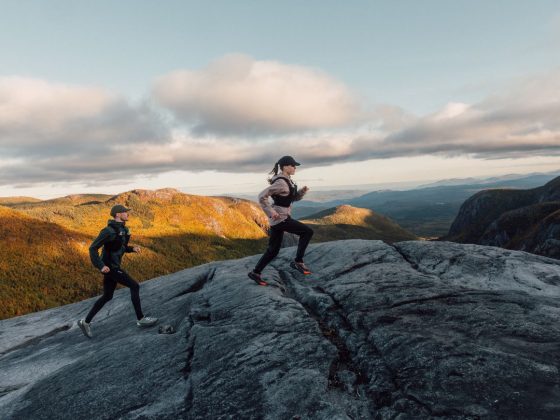
Heavy gear is a drag. It makes little difference whether you’re a camper, paddler, hiker, runner, biker or climber. No one wants to be held back by an unwieldy kit when accessing their beloved wilderness or sidecountry. When I started serious canoe tripping in the 1990s I made “sacrifices” (a skeleton crew of clothes, no pillow, no whiskey) because my tent, sleeping bag and pad were heavy and bulky, but non-negotiable.
Thankfully, some ingenious MEC people have been working hard to make everyone’s overnight outdoor life a lot lighter.

This spring, MEC introduces the 2Kilo Project, an ultralight backcountry camp system: a tent, sleeping bag and sleeping pad, plus the backpack they fit in, tipping the scales at two kilograms all in.
(Each item is sold separately; it’s not sold as a kit. But MEC offers a 15 per cent discount if you bundle up MEC-label camp gear purchases.)
I wince at the memory of the massive, dead-heavy backpack I carried on my solo through-hike of the La Cloche Silhouette Trail in Ontario’s Killarney Provincial Park in 1999. After a sweaty day of cursing, muscle spasms, near falls and pack sores, the weather turned, pouring rain for more than 12 hours, making my gear even heavier.
Fortunately, those bad old days are over.
MEC’s 2Kilo Project: An Ultralight Gear Rethink
The 2Kilo Project began with a simple but formidable challenge: build a practical backcountry camp system lighter than previously thought possible. (For scale, 2 kilograms is roughly equivalent to two full Nalgene bottles, a bag of sugar or a large pineapple.) And rather than reducing weight piece by piece, the MEC design team system-engineered the materials, sizing, load, insulation and packability to improve efficiency, with each part matched, nested together and quick to deploy.
ML recently caught up with Mark Knight, MEC’s director of product creation, at his studio in North Van to talk about the 2Kilo Project.

ML: What’s the aim of the 2Kilo Project?
MK: The 2Kilo Project is some of the world’s lightest gear, but makes it approachable. We weren’t trying to create science projects. It’s not supposed to be a spreadsheet-based product collection. It’s supposed to be an appealing product creation for everyone.
ML: Did 2 kilograms feel like an impossible goal? How did you approach it?
MK: Each product needed full standalone performance. We identified where components naturally overlapped to reduce weight in smarter ways without sacrificing durability, comfort or performance. And it was a key driver for me to make sure that each product wasn’t a half product, like a sleeping pad with holes in it or a tent that felt like a coffin. So it was a challenge to ourselves to see whether it was even physically possible.
“Each product needed full standalone performance.”
I did some calculations based on where we were, and our current lightest backpack/sleeping bag/tent/pad was 3.2 kilos. So we needed to shave off 60 per cent of the weight. So that meant that we already had to innovate because we weren’t even close. So it was a technological challenge… and we landed on creating the specs for each product, knowing our history of selling those types of products for decades and ensuring we could make all of our products better.

ML: Not all that long ago, a full camping kit weighing 2 kilograms would have been rare even for alpinists.
MK: Ultralight gear was fairly niche 10 years ago. It was still made mostly by enthusiasts out of their garage or by really small businesses. What we’ve seen more and more over the past 10 years is that lightness is becoming much more mainstream. Larger brands, including ourselves, are putting out lighter backpacks and gear, taking the niche out of it.
ML: Is the 2Kilo Project targeted mainly at fastpackers?
MK: I think it’s an overlap. Obviously it does target fastpackers because it’s lightweight, minimalist and compact. But I think the appeal is more mass market than your traditional fastpackers. It’s ideal for bikepacking because of its compact size and light weight. It’s also really good for normal backpacking and hut trips. I took the Bravo 6 sleeping pad on a hut trip because it’s so small, super comfy and one of our lightest, warmest pads. That’s where we’re getting this crossover of technology out of the niche space into the mass market, which is phenomenal because no one wants to be hauling heavy stuff. That’s kind of a universal desire.
ML: Tell us about an innovation that went into the system.
MK: One key innovation was the sleeping bag design. We scanned a human body and modeled the bag around it, then used an algorithm to optimize the down fill. We also developed a removable hood system, so you can wear it separately, which saves weight and adds flexibility. That innovation pushed us to improve the sleeping pad, increasing its warmth to an R-value of six while still hitting weight targets.
“No one wants to be hauling heavy stuff. That’s kind of a universal desire.“
ML: What did the testing process look like?
MK: I did a lot of mock-ups in my basement. I was 3D-printing and testing everything. The system was field-tested together near the end, but each product is standalone and excels at its job. It’s not meant to be a system where everything transforms into something else. For example, with the tent, I was trialling innovative techniques for tent poles. A lot of lightweight tent technologies rely on trekking poles, but I don’t use trekking poles. So I wanted to include the tent pole weight in the system. I went to a camera tripod manufacturer and made our tent pole from that. That led to developing carbon-fibre tent pegs, which are about a third of the weight of traditional pegs. All the innovations were developed in parallel, and as we made advancements in one system, it meant we could spend weight on another.
Early testing was small—you want to fail fast. We’d test things in the back garden. As prototypes improved, they were tested in more serious conditions like the Tantalus Mountains and the Sunshine Coast during storms. Then they progressed to longer missions in the Rockies. So they were tested across Canada on different trips. One of MEC’s strengths is that we have staff across the country who are super engaged. They can send feedback directly, and we can fold that into our designs. That’s part of our normal design process.

ML: How much extra space is in the pack?
MK: It’s a 32-litre backpack, and about two-thirds of it is free space after packing the system. That space is for food, clothing and other essentials. It can be your only pack. The shoulder harness is derived from running bags but with more support. It includes front access for hydration bottles and extra pockets, while still leaving room inside for additional gear.
ML: What’s significant about the project overall?
MK: Not only did we hit the weight target, but we developed technologies that are now going into MEC’s main product lines. It’s not just a one-off project—it’s improving the entire range. And it makes trips easier. You save weight, gain space and can bring better food or extra items. It’s almost like cheating: you put the pack on and realize all your camping gear is already in it.
The MEC 2Kilo Project at a Glance


Alpha 1UL Tent (660g complete / 565g without carbon pole). Goodbye, cramped bivy sack! This hybrid single-wall tent balances low weight, condensation control and livability. The non-freestanding design includes carbon poles and pegs, aluminum J-stakes, integrated guy lines and adaptable pitch options. Comfortable for one person, the Alpha 1UL boasts more usable space (floor area is 1.60 square metres) than most tents in this category. It even has a vestibule. And gram-counters can swap out the tent pole for a trekking pole.

Delta Pivot -2 Sleeping Bag (505g, –2°C rating). This -2°C bag features a removable hood and adaptive shaping to maintain insulation as your body shifts during sleep. The bag doesn’t feel claustrophobic like some minimalist mummy bags. Body-mapped 900-fill RDS down combines with the PrimaLoft Cross-Core Aerogel hood to deliver warmth where it counts. For warm-weather trips, leave the hood at home. The CAD-optimized baffles and ultralight materials max out the thermal efficiency. “We wanted something usable in Canadian conditions,” says Mark Knight. The Delta Pivot’s materials are bluesign-approved, as is the hood insulation.

Bravo 6 Sleeping Pad (455g, 8.5 cm thickness, R-value 5.8). A featherweight pad that doesn’t sacrifice one iota of comfort. This four-season, full-size pad uses MEC’s SL Xtreme Technology to reflect body heat and increase insulation efficiency. Its 183×56 cm profile avoids excessive tapering, while the generous 8.5 cm thickness smooths out uneven ground. The included pump sack allows fast inflation so moisture doesn’t enter the pad, helping preserve long-term performance. Constructed from 100% recycled, bluesign-approved materials.

Charlie 32L UL Pack (400g). Built with Challenge Sailcloth TX70 waterproof fabric reinforced with UHMWPE fibres, the Charlie balances durability with extremely minimal weight. Features include a removable waist belt, removable foam back panel that doubles as a sit pad, large front stash pocket, shoulder pockets for snacks and water bottles and attachments for rope, ice axe or trekking poles. It feels like a run pack but holds everything you need. – Ned Morgan
The full collection will be available in the Vancouver, Nanaimo, Calgary, Toronto, Ottawa and Montréal MEC stores. All other stores will have the Charlie 32L UL pack available. Buy pieces individually or bundle for 15% off. MEC Members get an additional 10% off with member pricing, so final price varies by setup. Quantities are limited.
Check the ML Podcast!