Rick Hansen brings his story to the 2026 Whistler Film Festival, opening a conversation about accessibility, adventure and the work still ahead.
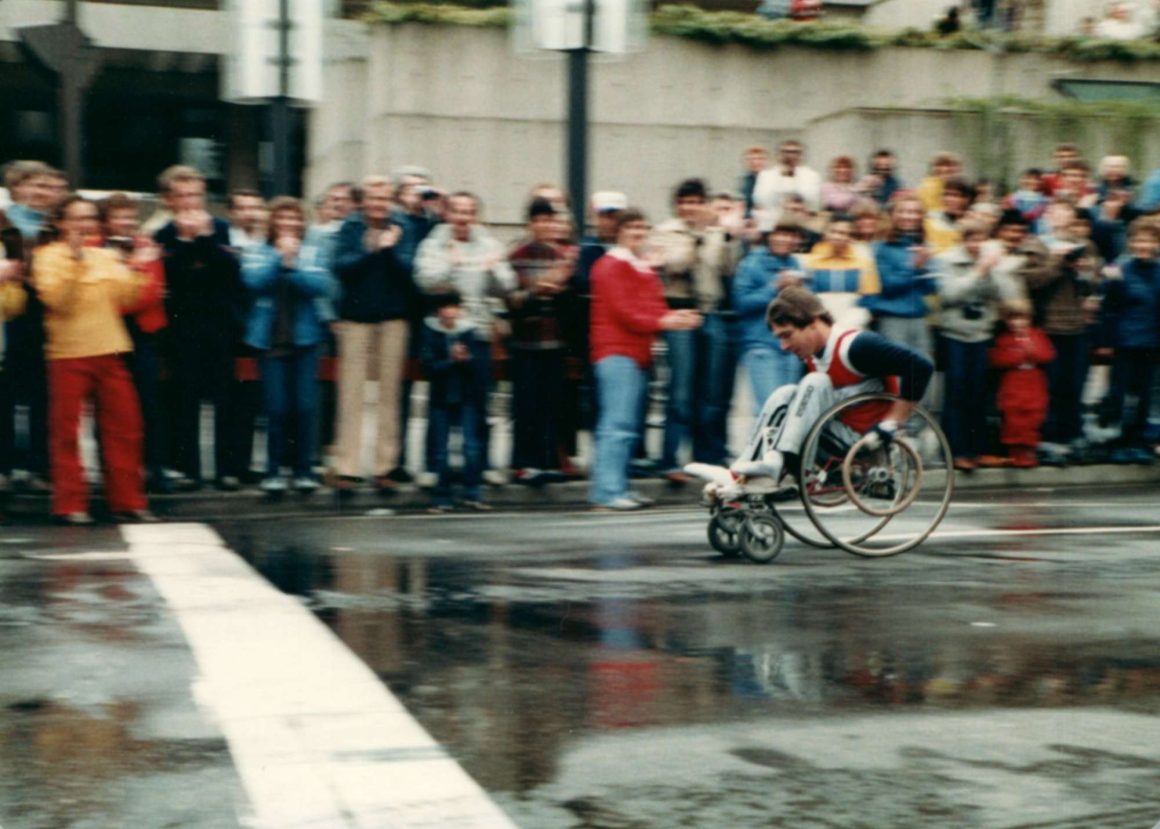
More than 40,000 kilometres in 34 countries and 26 months on the road. The scale of Rick Hansen’s Man In Motion World Tour is still staggering, nearly four decades after he wheeled home to B.C. in 1987.
But a journey that became part of Canada’s collective memory also holds stories Hansen never revealed, until now. In the feature doc Man in Motion: The Rick Hansen Story, personal audio diaries, rare archival footage and previously unseen 35mm footage of his homecoming pull audiences closer—not only to the story, but to the person behind such an extraordinary undertaking.
Hansen shares this story at the Whistler Film Festival (Dec. 2-6) on Dec. 3, which also happens to be International Day of Persons with Disabilities. Alongside a screening of the documentary, he will join festival ambassador George Stroumboulopoulos on stage for a conversation as part of the festival’s Signature Series. In a community that measures life in vertical metres and personal records, Hansen’s visit poses a question worth sitting with: Who gets to participate? Who gets a PB? Who gets to chase those records in the first place?
Hansen was 15 years old when a truck accident left him paralyzed. He went on to become a world-class wheelchair athlete and Canadian Paralympian before setting out on the Tour that made him a household name in 1985. His goal was to challenge perceptions of people with disabilities and raise funds to help remove barriers.
Directed by Adrian Buitenhuis and produced by Ryan Reynolds and Derik Murray, the documentary revisits that undertaking through material that places viewers inside the experience. Hansen’s audio diaries, shared publicly for the first time, offer a particularly personal connection to a journey often remembered through its biggest public moments.
“It was quite emotional, after 40 years, to listen to these diaries of my 27-year-old self embarking on the greatest challenge of my life,” Hansen says. “I was reminded of how big a struggle it was and how precarious each day was—we were always on a razor’s edge between imploding and exploding.”
“There were times I really needed to lean on everyone to find the inspiration, encouragement and strength to continue. No one gets anywhere on their own.”
“It was quite emotional, after 40 years, to listen to these diaries of my 27-year-old self…”
For Whistler, the conversation has a local dimension. The community’s involvement in the 2010 Olympic and Paralympic Winter Games, followed by the 2025 Invictus Games, has made accessibility part of its evolving identity. Hansen sees those milestones within a longer effort.
“From the lead-up to the 2010 Olympic and Paralympic Winter Games to hosting the Invictus Games in 2025, Whistler has demonstrated an ongoing commitment to identifying accessibility barriers and making progress year after year,” Hansen said. “That spirit reflects the message at the heart of this film, progress is possible when people come together, challenge perceptions and work together to remove barriers.”
Removing barriers in Whistler doesn’t just apply to the wild terrain or programs offered to get out and explore it.

“The Whistler Film Festival has prioritized accessibility for the past three years,” said outgoing executive director Angela Heck. “With the support of accessibility coordinator Angela Chalmers, WFF continues to improve its systems and communications each year. We recognize there’s still a long way to go, but we want to keep this top of mind in all of our planning, behind the scenes and on our screens.”
Heck added that last year’s opening night film, Forward from director Nic Collar, and the festival’s partnership with Whistler Adaptive Sport set the tone for the festival and confirmed strong community interest in accessibility themes and initiatives.
In a mountain town, those barriers can be concrete: the design of a trail, the entrance to a building, the availability of adaptive equipment. They can also begin with assumptions about who belongs on the mountain or what someone wants to try.
For those who organize their lives around getting outside, Hansen’s visit is an opportunity to consider what makes that freedom possible, and how to extend it to more people.
“The man pushed his way over mountains. Feels right to have a conversation with him in Whistler.”
“Mountain communities in beautiful B.C. and beyond have made tremendous progress, and with it has come a more inclusive mindset,” Hansen says. “Winter and summer, we’ve seen significant improvements in hospitality, transportation and streetscapes, as well as in outdoor activities like para-skiing, adaptive mountain biking and water sports.”
“All new housing should be 100% accessible-ready, and municipalities have a critical role in making sure new developments work for people with disabilities as employees, guests and community members.”
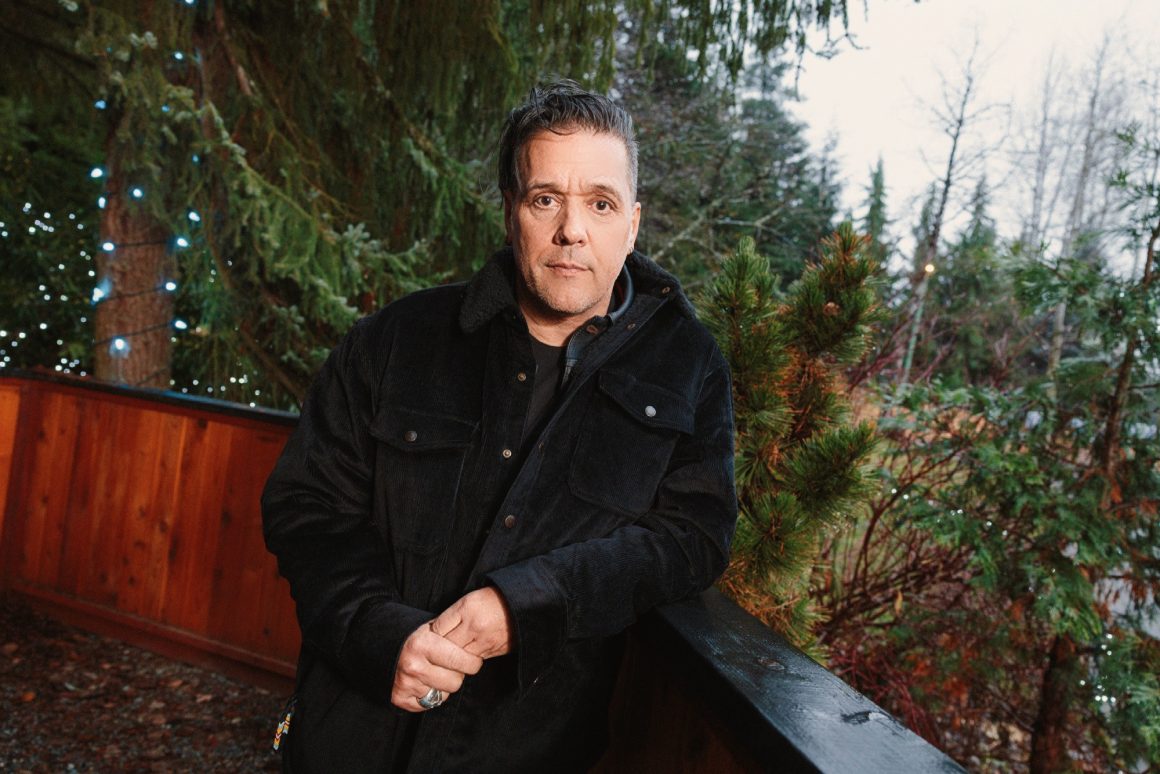
Stroumboulopoulos returns to Whistler to host all three of this year’s Signature Series conversations. With Hansen, the live setting offers room to explore the details behind a familiar story: what sustained him, how his thinking has changed and what he hopes this film can set in motion.
“Everybody knows the 40,000 kilometres. I want to know about the one where he wanted to quit, and what got him to the next one,” Stroumboulopoulos says. “The man pushed his way over mountains. Feels right to have a conversation with him in Whistler.”
This and other questions about perspective and storytelling extend across the festival.
Métis/Dene filmmaker Marie Clements joins Stroumboulopoulos on Dec. 4 for a masterclass accompanying her lauded feature How We Stand. Adapted from her play Tombs of the Vanishing Indian, the film follows a mother and her three daughters who move from Oklahoma to Los Angeles. A tragedy separates the sisters, who reunite 20 years later on very different paths.
On Dec. 5, screenwriter Dori Carter and The X-Files creator Chris Carter discuss Queens for a Day, a psycho-noir satire that Dori wrote and Chris directed and was shot entirely in B.C. Their conversation will dig into Chris’s longtime contribution to building what ultimately became known as Hollywood North.
The festival’s Content Summit brings disability representation into the production conversation, too. A case study examines Adapting, AMI-tv’s first scripted series. Developed from a concept by father-daughter writing duo Garner and Rachael Ransom, the drama draws on Rachael’s experience living with cerebral palsy to explore adolescence from a first-person perspective.
“I’m proud of the progress, but I’m not satisfied. I have to believe my best work is in front of me, so I am still in motion.”
For Hansen, his appearance connects the history captured on screen with the work he continues through the Rick Hansen Foundation. The Tour may have ended in 1987, but its ambition to create a more accessible world remains unfinished.
“I’m proud of the progress, but I’m not satisfied,” Hansen says. “I have to believe my best work is in front of me, so I am still in motion.”
“My hope is they will see the film as an example of what’s possible when barriers are removed and we work together—as communities, as a nation and as a world. I encourage them to join us by spotting barriers, forming teams in their communities to identify solutions and helping generate the awareness and capital to break those barriers down.”
Catch the screening and Hansen’s talk in Whistler and take a moment to reflect on how much has changed. Then step outside and consider what still needs to be done.
The 26th Whistler Film Festival takes place December 2-6, 2026. Catch Rick Hansen’s Signature Series Talent Talk on Dec. 3—tickets available at whistlerfilmfestival.com.
Text supplied by Whistler Film Festival.

Check the ML Podcast!