words :: Feet Banks
You can debate the ethics of hunting and angling with your granola-munching vegan friends all you want, but the truth is when it comes to actually getting out there and fighting for the conservation of animals and habitat, the “rod ‘n gun” communities are doing far more than most people know, and probably more than anyone else does.
Or at least, that was my take-home after joining Team Yeti at the tenth annual “Jurassic Classic” sturgeon fishing event, which has raised over $500,000 in the past decade to protect the Fraser River basin Bighorn Sheep population.
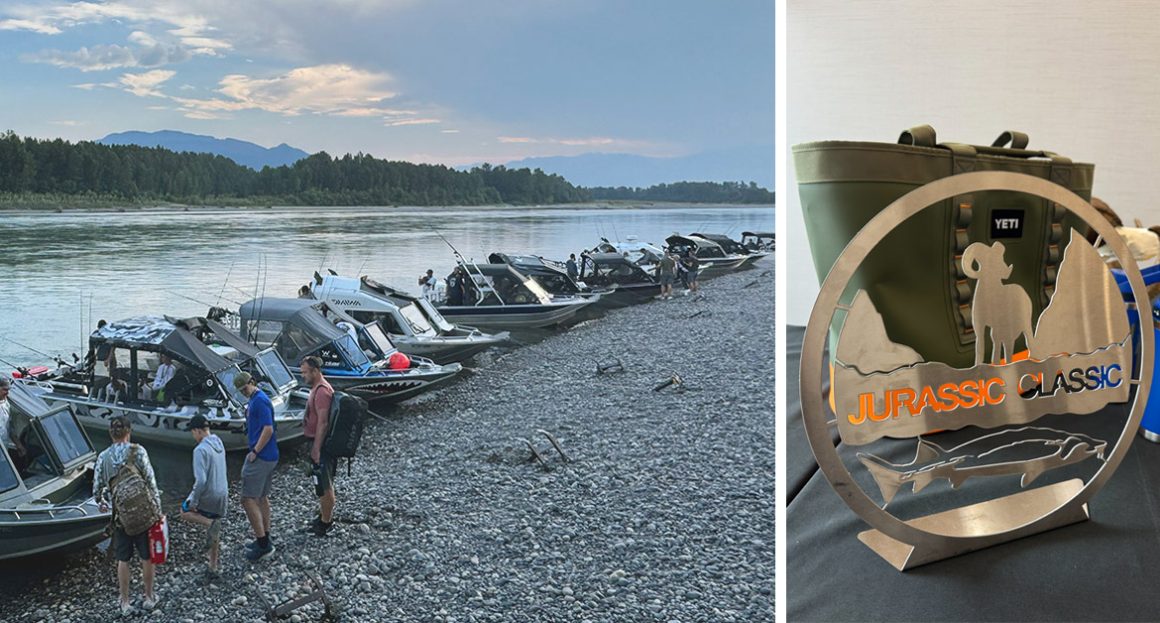
Catching a giant dinosaur fish to protect sheep might sound like a strange way to go about things, because it is. But the truth is, the Fraser River Bighorns are at risk of being wiped out completely and the BC conservation community is doing anything and everything it takes.
“Catch fish to save sheep…Sure it sounds funny,” says Wild Sheep Society of British Columbia (WSSBC) president Kyle Stelter at the Jurassic Classic welcome dinner. “But we look at it as using one successful conservation initiative to build momentum and resources for another.”
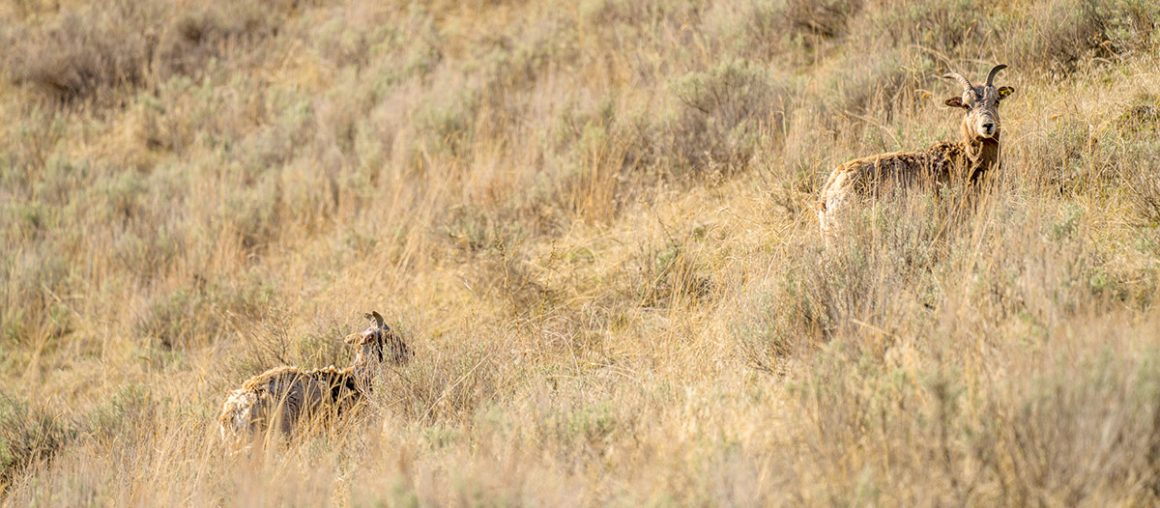
Let’s start with the sheep. California Bighorns, despite the name, are as local as it gets. They migrated north as the glacial ice sheets melted somewhere between 10–20,000 years ago. They pretty much crushed it until the late 1800s, when gold rush crowds flooded the Fraser Canyon and overhunted pretty much any animal in sight. Unregulated hunting continued up into the 1940s and the sheep population paid a high price.
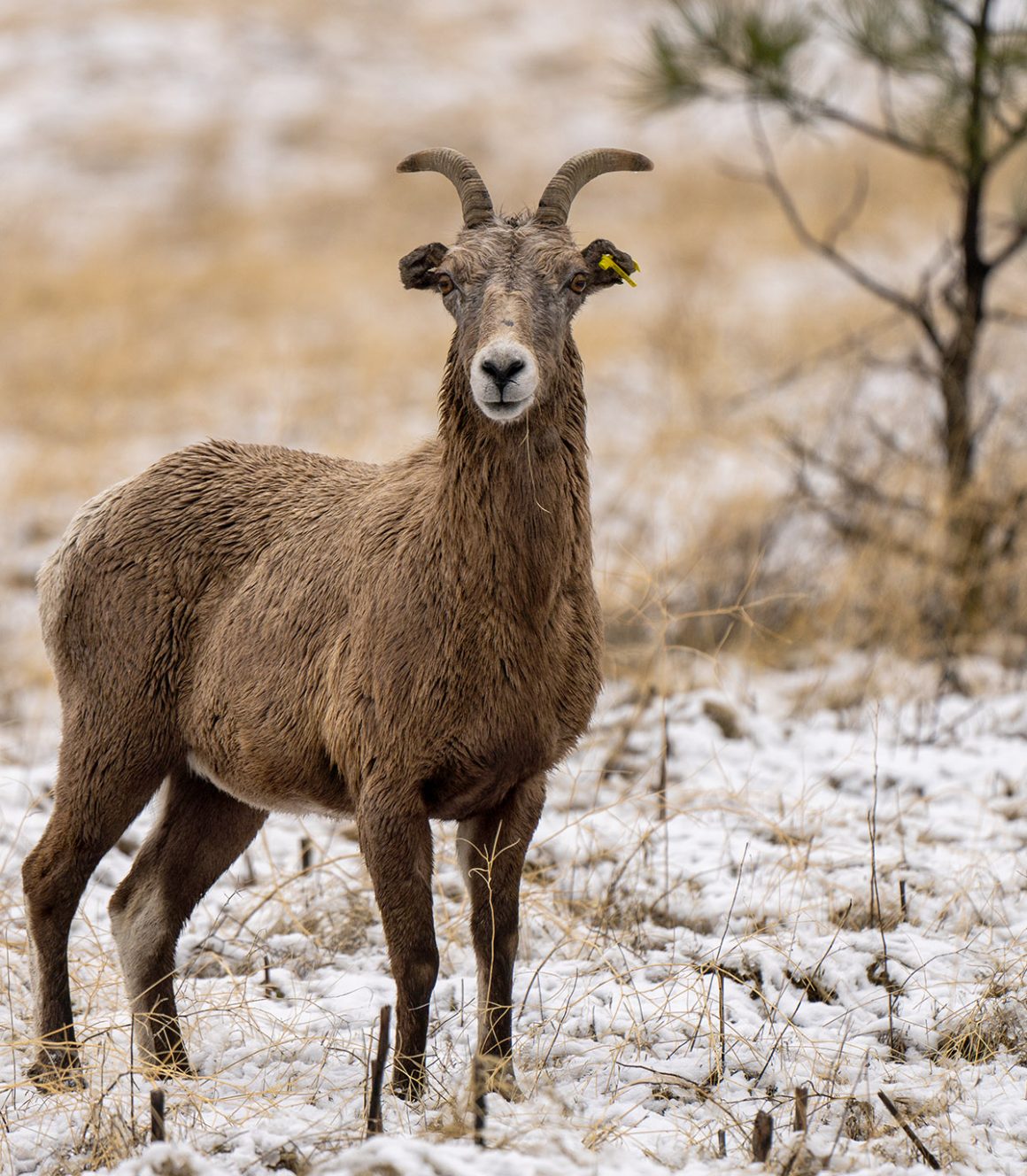
By the mid 20th century however, strict hunting regulations and the creation of protected sheep habitat reserves helped the sheep rebound. By the early 1990s the Fraser River herd had rebounded to an estimated 2,400 sheep. But sometime around 2010-11, a bacteria called Mycoplasma ovipneumoniae (M. ovi) jumped over from domesticated livestock sheep. Things went downhill quickly.
M. ovi is commonly found in the nasal cavity and sinus of apparently healthy domestic sheep and goats. And during the rutting season, it takes more than a barbed wire fence to prevent those sheep from passing the disease onto a wild sheep drawn down for some potential loving. Associated with pneumonia, particularly in newborn lambs, the M. ovi bacteria (as well as continued habitat loss/change) decimated the Fraser herd so much that even as recently as 2020, there were only an estimated 700–800 sheep left. Some regions of the Fraser River canyon had years where no lambs survived.
During the rutting season, it takes more than a barbed wire fence to prevent those sheep from passing the disease onto a wild sheep drawn down for some potential loving.
Formed in 1992, the WSSBC has tried a number of initiatives to help sheep populations, including transplanting sheep around the province and controlled burns to help revitalize sheep grazing habitat.
“Natural fire cycles used to help create a more open-range habitat,” Kyle explains. “Fire adds nutrients to the soil, producing better grasses for grazing. After decades of fire suppression, natural grazing lands become forests, which prevent the grasses from growing beneath them. As well, sheep need sight lines to identify predators—if there is dense brush, wolves, grizzlies and cougars can get close to them. On an open range the sheep can see predators coming miles away.”
Kyle adds that the WSSBC works through extensive government approval processes to perform three to five controlled burns each year. “The biggest factor,” he says, “is we need perfect environmental conditions—it has to be dry enough to burn but not so dry we can’t control the fires. Natural fires nowadays are so massive and destructive to the land and communities. Everything has to be perfect to even try and duplicate what nature used to do on its own.”
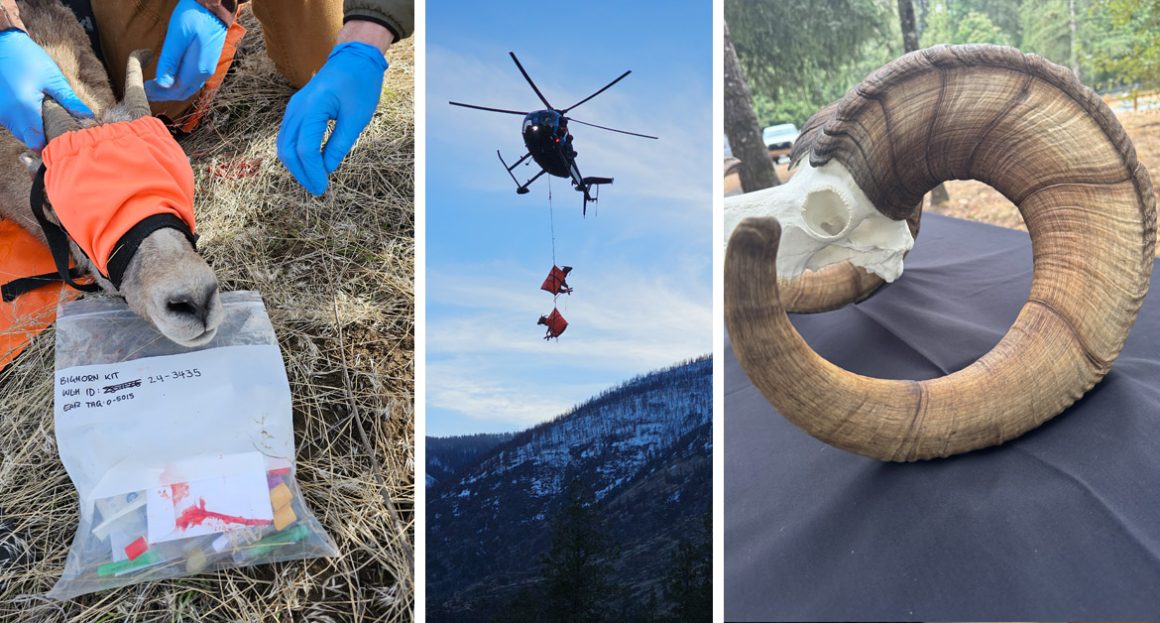
Nature has no way to protect wild sheep against domestic diseases however, so WSSBC also run “test and remove” initiatives to take M. ovi-infected sheep out of the general population before they can spread the disease others. Capturing and testing a wild animal known for living in rugged, steep terrain is not easy though—Kyle and Wild Sheep Society volunteers have to find the animals via helicopter, then swoop in and shoot them with a Batman-esque net gun to collect blood samples.
“We have a device that lets us perform one test in the field and a second sample is sent to a lab in Washington state. We put VHF trackers on the sheep and if both tests come back positive, we fly back in and remove that sheep. Lambs and ewes are the focus right now because they tend to be the carriers and the vectors for it. I wish we could test every sheep but right now we are only able to test about 80 sheep in a year.”
Kyle and Wild Sheep Society volunteers have to find the animals via helicopter, then swoop in and shoot them with a Batman-esque net gun to collect blood samples.
That’s two heli flights to remove a single sick sheep. It’s not easy, and it’s not cheap.
And that’s where the sturgeon come in. Catching fish to save sheep, and maybe hook into the angling experience of a lifetime while we’re at it.
Fraser River Sturgeon have been around for about 150-200 million years. That’s longer than Bighorn Sheep, humans, the actual Fraser River, or pretty much anything else—these fish are dinosaurs and they lived alongside all the other dinosaurs… and survived.
The opening reception of the annual Jurassic Classic sturgeon fishing event is about 65 people gathered in a ballroom in the finest hotel in Chilliwack, BC. The electric car charger is out of order and the Circle K convenience store across the street attracts some interesting characters after dark, but each hotel room has a Japanese-style bidet toilet, the beds are clean, and those of us in the ballroom—anglers, hunters and conservationists from across North America—are just here to catch some fish and help some sheep, share ideas (and fish stories) and have a good time.
These fish are dinosaurs and they lived alongside all the other dinosaurs… and survived.
“We come here to the land with a good heart and a good mind,” says Dean Werk in his welcome speech. Dean’s voice draws you in, partially because it has the gravelly low timbre of a 1980s professional wrestler, and also because it’s obvious he’s an expert in his field. Dean grew up and lives on the shores of the Fraser, has a lifetime of experience fishing it, and is also the owner of Great River Fishing Adventures.
The Jurassic Classic was his idea, he assembles the boats and guides, and since 2015 the event has raised over $500,000 for the Wild Sheep Society. Much of those funds comes from the opening night “guides auction,” where Jurassic Classic participants bid on which guides and jetboats they think will best get them into the big fish. This year, Dean takes the top bid at over $12,000. The next highest bid: his son Mitch. If you want the big fish at the classic, you gotta get the Werk.
I have my own 17-year-old son at the Classic. We’re guests of team Yeti, title sponsors of the Jurassic Classic since 2022. (Hunters and anglers absolutely love Yeti products for keeping their harvests cold and their drinks warm.) As part of the sponsor team, we can’t compete in the actual derby, but facing down the prospect of playing with a living dinosaur, no one was all that bothered.
Dean’s voice draws you in, partially because it has the gravelly low timbre of a 1980s professional wrestler, and also because it’s obvious he’s an expert in his field.
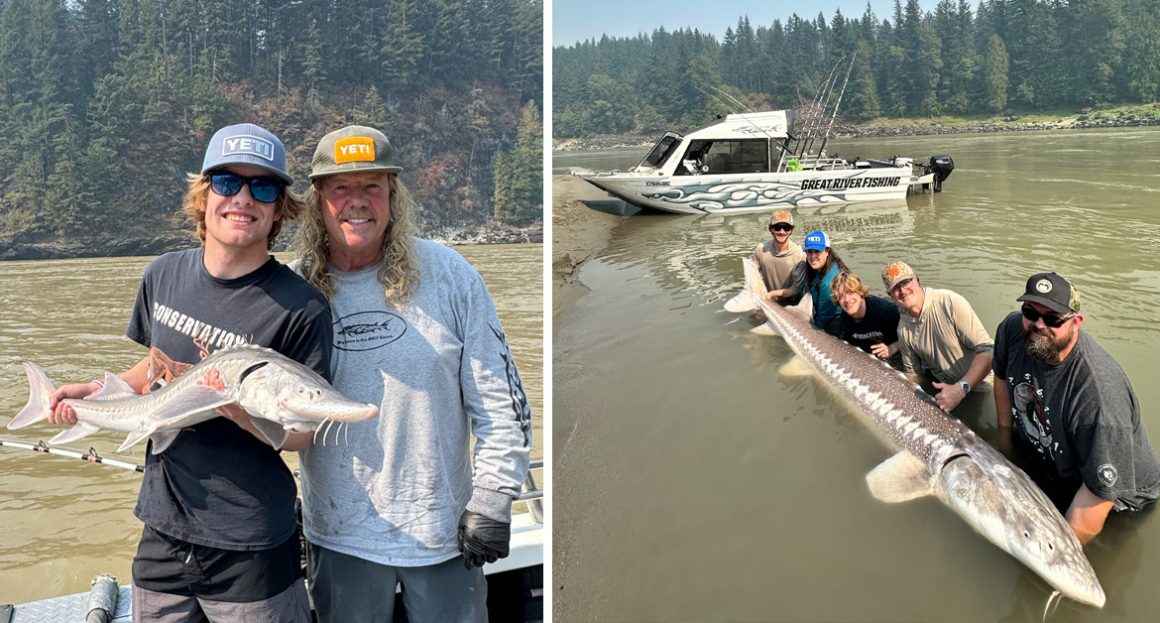
The Fraser River has the world’s largest population of white sturgeon, but it wasn’t always so. In the late 1800s and early 1900s the fishery was heavily exploited; reports from the Fraser River Sturgeon Conservation Society (FRSCS) estimate that in 1897 the commercial harvest alone pulled over 500,000 kilograms of fish from the river. (Are we seeing a trend here? Much like the sheep populations, it seems early settlers to the province took a very shortsighted view on resource management.)
There’s little data available through most of the 1900s but by all accounts, overfishing, habitat changes and increased development along the river had the sturgeon population in trouble even before locals noticed a large, unexplained “mortality event” in 1993-94. It was time to take real action.
Related content from ML:
First, the First Nations along the river halted their harvests. Next, government officials banned the (already greatly reduced) commercial fishery, while the recreational angler shifted to catch-and-release fishing only. After a five-year, volunteer-powered monitoring project, BC Fisheries, the local First Nations, the newly established FRSCS and local fishing guides launched a stewardship project in the late ’90s with the goal of producing reliable information on sturgeon numbers, movement and migration patterns.
Since 2000, Dean’s Great River guides have tagged more than 50,000 fish themselves. Rick Stahl, our guide in Team Yeti boat #2 for day one of the Classic, explains how the tagging and tracking system works. Participants in the stewardship program (most of which are guides on the river every day) scan each fish caught for a Passive Integrated Transponder (PIT) chip which has a unique ID number that is recorded, along with the fish’s length, girth, location caught and any noteworthy observations on its condition or apparent health. If a sturgeon is caught without a chip, guides have the equipment and training to insert one on the spot. This continuous log of growth, health and movement makes the Fraser sturgeon monitoring project one of the largest and most complete datasets for a single fish population anywhere in the world.
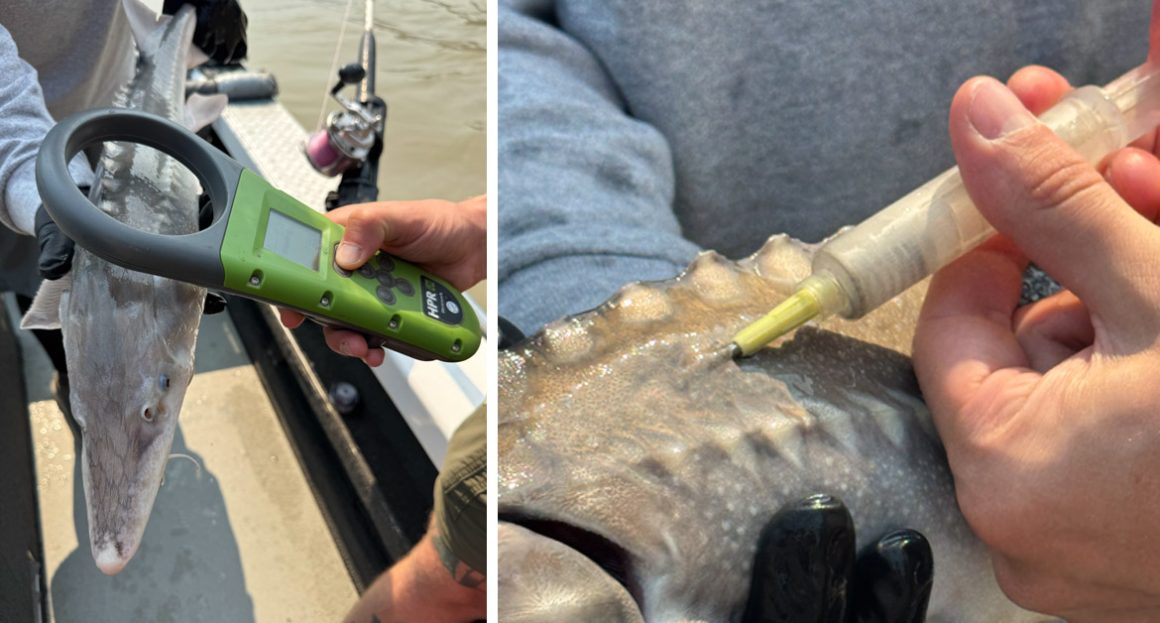
“Even with more than 20 years of monitoring, there is still a lot we don’t know,” Rick says. “One fish didn’t seem to ever leave a 1.5-kilometer stretch of the river, another was re-caught in the Sacramento River down in California. The oldest sturgeon fossils are over 300 million years old, and the fish are largely unchanged. For perspective, the oldest T-Rex fossils are only 67 million years old.”
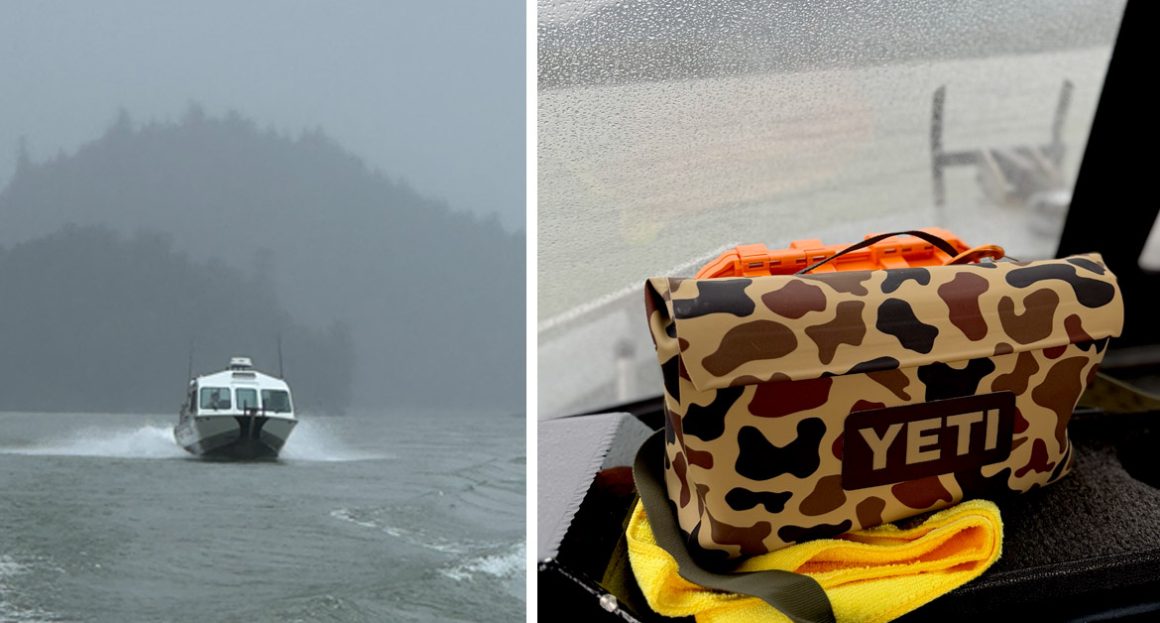
It’s a cooler, overcast August day and the sturgeon aren’t biting. Sipping still-piping-hot coffee from our new Yeti Rambler travel bottles helps fill the time, as does Rich’s fishing tales and sturgeon knowledge (pro tip: savvy anglers only use beverage containers that can fully seal when not in use, because there’s always a chance of knocking a drink over whilst battling a big fish, or two.)
“The biggest recorded sturgeon in this river was over 20 feet,” Rick says. “Back in the 1940s. They used a tractor to pull it up onto land. These days the big ones are around 11 feet. Which is still up over 1000 pounds. People have caught fish over 150 years old, that’s older than Canada.”
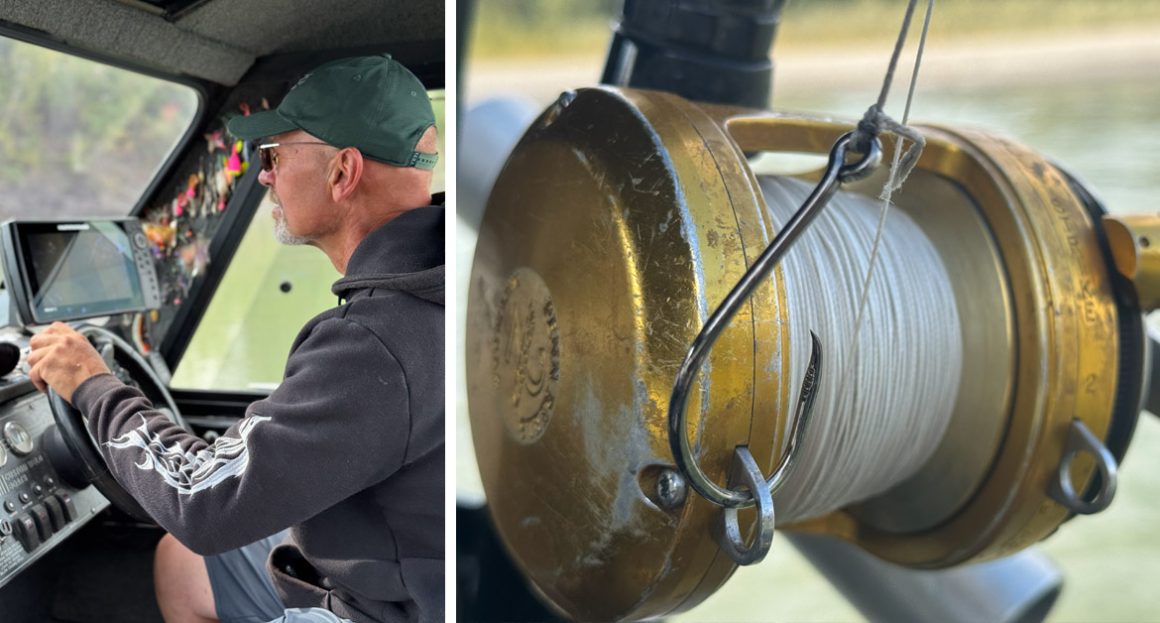
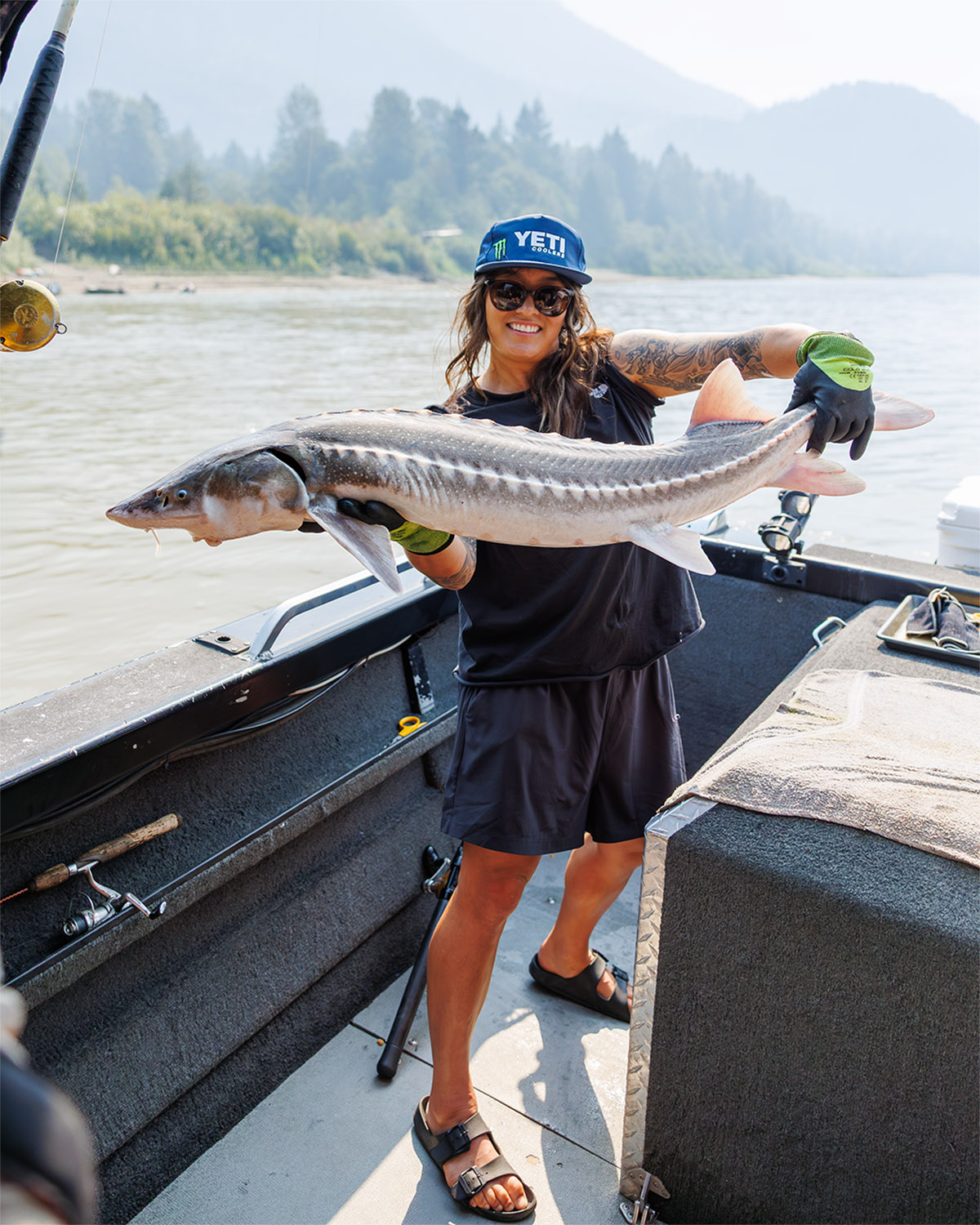
Sturgeon have no bones, they’re made of cartilage (like sharks) and covered in rows of armoured plates called scutes that protect the fish from predators and abrasive river bottoms. On smaller, younger sturgeon, the scutes can be razor sharp, as the fish ages the scutes wear and smooth.
Despite having no teeth, sturgeon are predators that will eat live salmon, pike minnows (suckerfish) and even sometimes other sturgeon. This time of year, much of their diet comes from spawning salmon and salmon carcasses.
“They eat by sucking up food off the bottom,” Rick continues while baiting a large barbless round hook with a fresh salmon head. “They like sand and silt. Researchers once kept a pair of sturgeon in a tank and they wouldn’t eat off a concrete bottom. They didn’t eat for 18 months. As soon as they placed them in a natural pond they started eating again.”
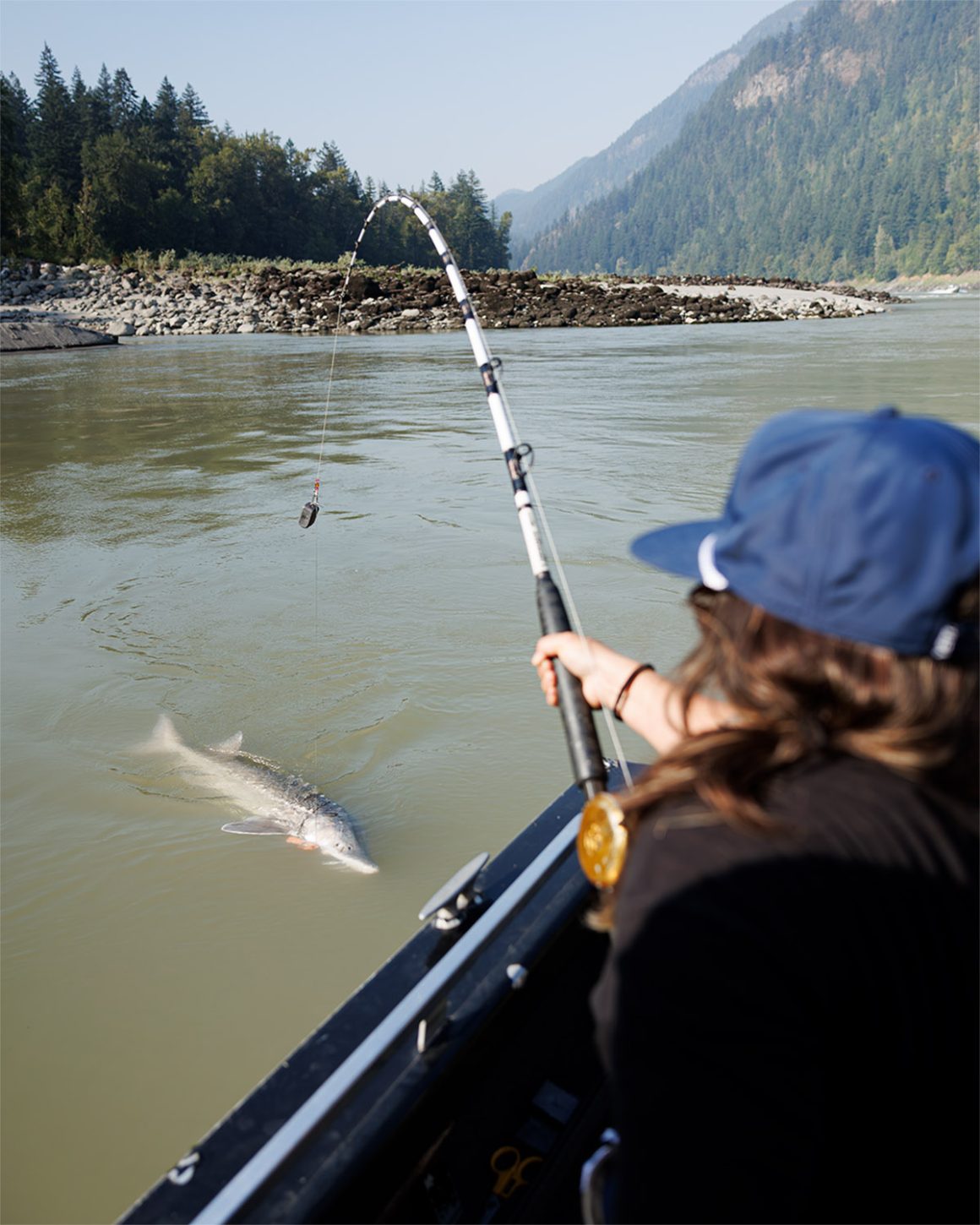
And then we’re into one. A big one. The reel peels out line (130-pound test) and then, suddenly, the fish leaps into the air, thrashing high above the river’s surface the way a salmon or trout would. And the battle begins—45 minutes of reeling, reefing and handing the rod off to rest our screaming biceps and death-gripped finger muscles. Rick pilots the boat to shore where we can measure the fish and get the requisite, once-in-a-lifetime photos to commemorate that time we caught a dinosaur.
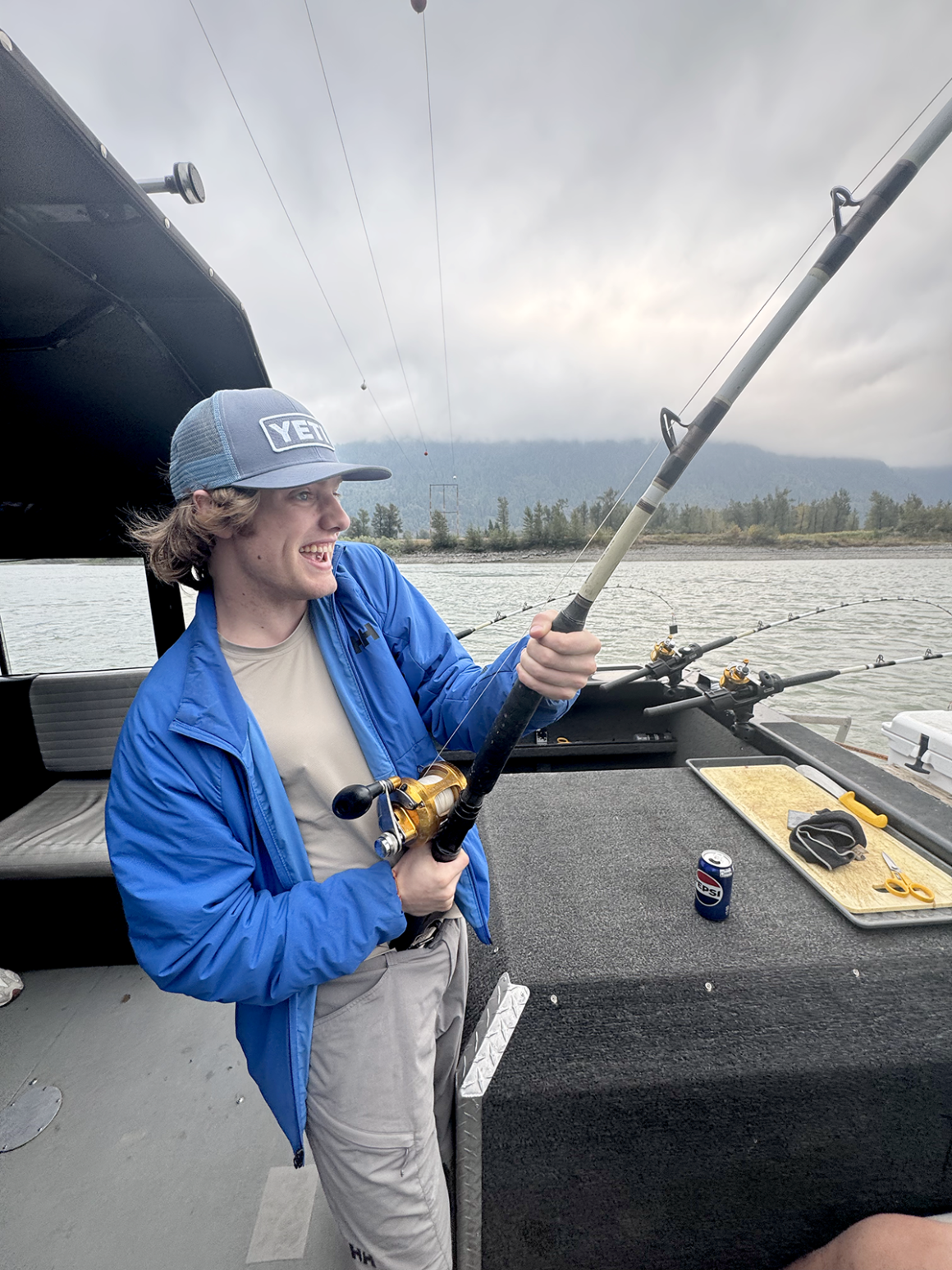
Nose to tail fork, the fish measures in at 8 feet 4 inches with a 41-inch girth behind the pectoral fins. Using a standardized calculation, Rick estimates it about 420 pounds before we gently release the sturgeon—a living dinosaur of armour and mystery—back into the flow of the Fraser. Sturgeon are notoriously tough—government studies show a less than 1 per cent mortality rate on catch-and-release sturgeon and Rick has heard stories of conservation officers catching poachers with sturgeon that have been out of the water for hours but kept on ice.
Returned to the river, the fish simply swam away. Through the conservation efforts and non-retention laws of the past 30 years, estimates put the Fraser River sturgeon population at somewhere around 53-55,000 fish, though many guides feel that is a conservative number.
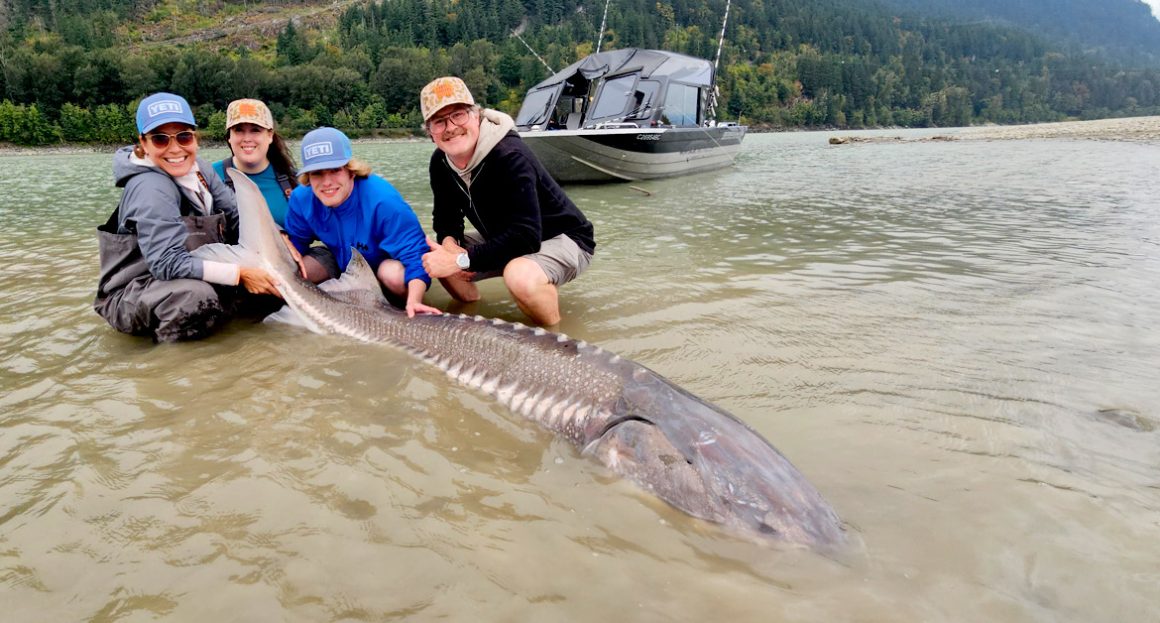
Over the course of the weekend our first big sturgeon ends up being the second largest fish caught (the eventual winner comes in at 8’9”) but the real prize is just seeing and touching a true living dinosaur. “Sturgeon can humble you,” Dean Werk announced at the start of the weekend. “And they will.”
Back in Chilliwack at the end of day two, the Jurassic Classic awards banquet includes a set of tiny Yeti tumblers for the smallest fish (49 centimetres this year, a true “scrawny Ronnie.”). There’s also a silent auction, a rifle raffle, and enough good fishing stories to tide everyone over until the next year, when a lot of the same people will come back together and do it again.
“This weekend is about conservation,” Kyle explains to the room as he thanks his volunteers, Dean and the collected guides from Great River Fishing Adventures, and the Yeti staff and ambassadors. “But it’s really about community and collaboration. The people in this room come here from all over the place but we are all here for the same reason, to find solutions and save these wild sheep.”
It’s a diverse room: kids and old timers, Americans and Canadians, hunters, anglers, photographers, guides, volunteers, journalists, there might even be a vegan in here somewhere. But everyone is united by a desire to make a difference and help save the Fraser River Bighorn population.
And it’s working. According to Kyle, since 2020 the WSSBC has seen about a 15 per cent increase in population and more healthy lambs surviving each year. “In 2020 we had about 800 sheep,” he says to the crowd. “Now we’re up around 1000. Much of that is thanks to the people in this room. I’m reminded of an old saying, but one that fits: ‘If not us, who? If not now, when?’”
The next morning, my son and I leave the 2026 Jurassic Classic both inspired and humbled, by the sturgeon certainly—no freshwater fishing experience in Canada compares—but also by the passion and the people. The Wild Sheep Society of British Columbia boasts around 2000 members right now. Membership costs $60 a year (or $1000 for life). If not now, when?
Wild Sheep Society of British Columbia
Great River Fishing Adventures

Check the ML Podcast!