This Coast Mountains-based artist’s innovative “remove and reveal” technique is a “delicate dance between presence and absence, where every stroke unveils a hint of what is below.” Words :: Kara-Leah Grant
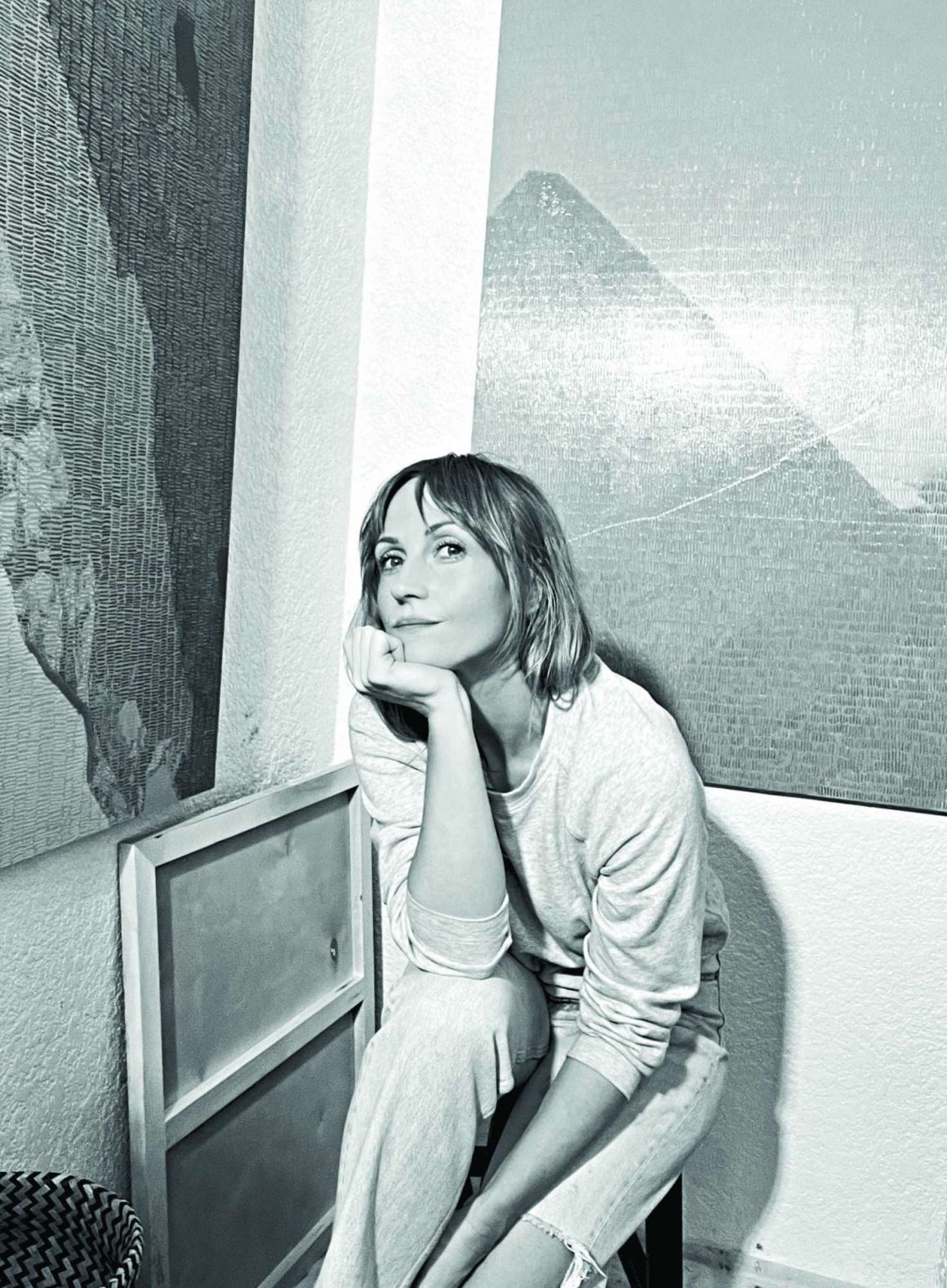
April Matheson breezes into Squamish’s Cloudburst Cafe, hot pink toque smooshed over her blonde locks, lamenting the lack of coffee spots on Highway 99.
She orders a dirty chai and lets it go cold while sharing the origin story of an artist who—though she would never claim it—may have invented a brand-new technique.
This is an artist who, at age 16, wowed family and friends in her small Ontarian town of Fort Frances with a pencil-crayon drawing of Nelly Furtado, yet didn’t find her way into art proper until her mid-30s.
Why? Crippling intergenerational perfectionism.
“It’s everywhere. I feel it seize up my whole body,” says April. “I never finished that piece because it had been shown to people. I was worried it wouldn’t live up to their expectations.”
Instead, she applied to the pharmacy program at the University of Manitoba—despite how working as a pharmacy tech made her feel. “Every day counting pills. There were no windows, everything was fluorescent lighting, the walls were white, your coat was white and it was soul-sucking. I’d dream about counting pills. I felt claustrophobic.”
Days before uni began, two people—her boss and a beloved aunt—delivered an identical message to her within twenty minutes: “I just really wish you were doing something with your art.”
Same words. Same tone. April panicked, listened and switched to a Bachelor of Fine Arts.
Post-degree, still saddled with that perfectionism, April used her artistic skills in high-end clothing boutiques. “It was a slow on-ramp to creativity,” she says. “It was less vulnerable, which was what I needed.” April even started her own successful boutique in Winnipeg with a business partner.
Then that relationship imploded.
Related content from ML:
“My identity was built into that business. That was my retirement, my career, my baby, my entire life,” she says. “I felt like this crumpled empty paper bag, smashed and pulverized into the ground. The rapid shedding of skin was wildly uncomfortable but the other side of it was this rapid growth, which I needed.”
April escaped to Vancouver, wandering through home furnishing stores for months, cinnamon bun and coffee in hand. “Ikea is the same wherever you go. I felt… at home. It was an easy way to meditate while still out in the world.”
That idle time created space for art to emerge. April met a boutique owner who rented art studios and says that, “Within a few months, I was like, ‘Can I maybe rent one of the studios?’ I began an art practice. I was so gentle with myself, with what I did.”
April created limitations, such as only using natural black ink on white paper and not being allowed to lift the pen. She smooshed things together that weren’t meant to mix—like oil paint and latex. She messed around, messed up and made mistakes, showing up in spite of the resistance.
“I would go in, sit there and scroll Instagram. As long as I got there, it didn’t matter. As long as I made just one mark on a piece of paper, it didn’t matter. I was so gentle with myself, with what I did.”
This gentle approach and her ability to just play, paying no mind to the results, finally bypassed April’s family pattern of perfectionism. Her experimentation over the years developed the technique that now defines her work.
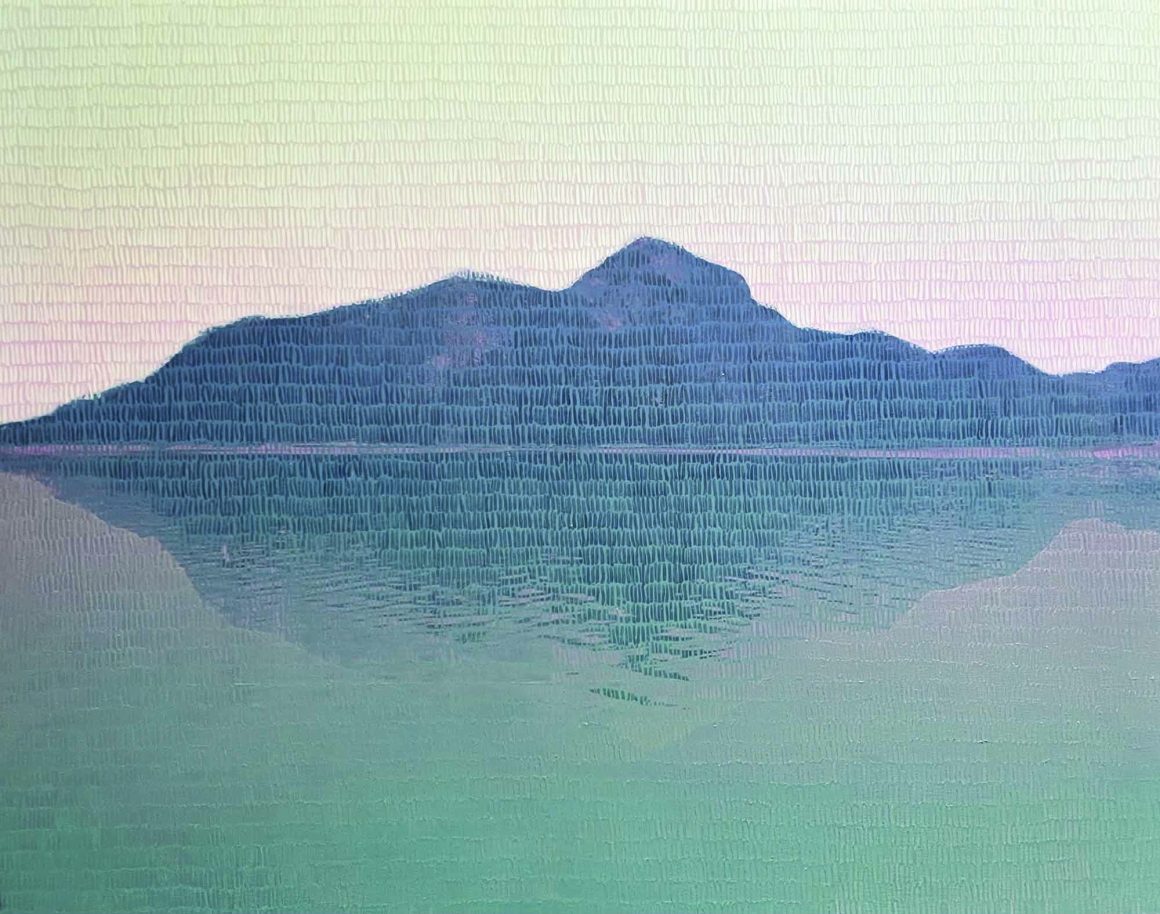
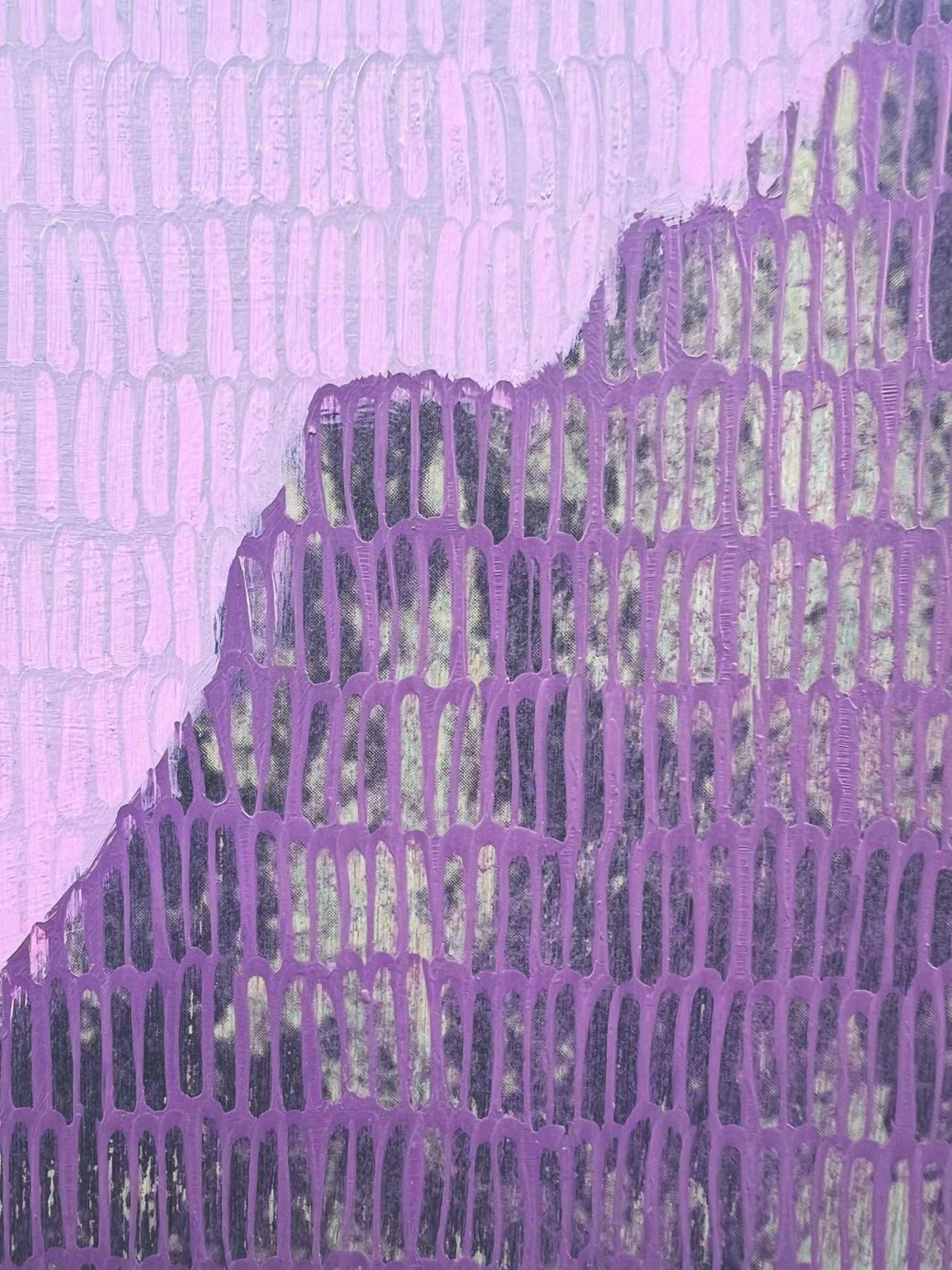
April applies oil paint over an acrylic base atop an enlarged photo before doing a “remove and reveal” process with a triangular eraser to etch away the oil paint. This technique creates a filtered window into the photo below. Each piece contains row after row of hundreds of miniature hand-etched windows.
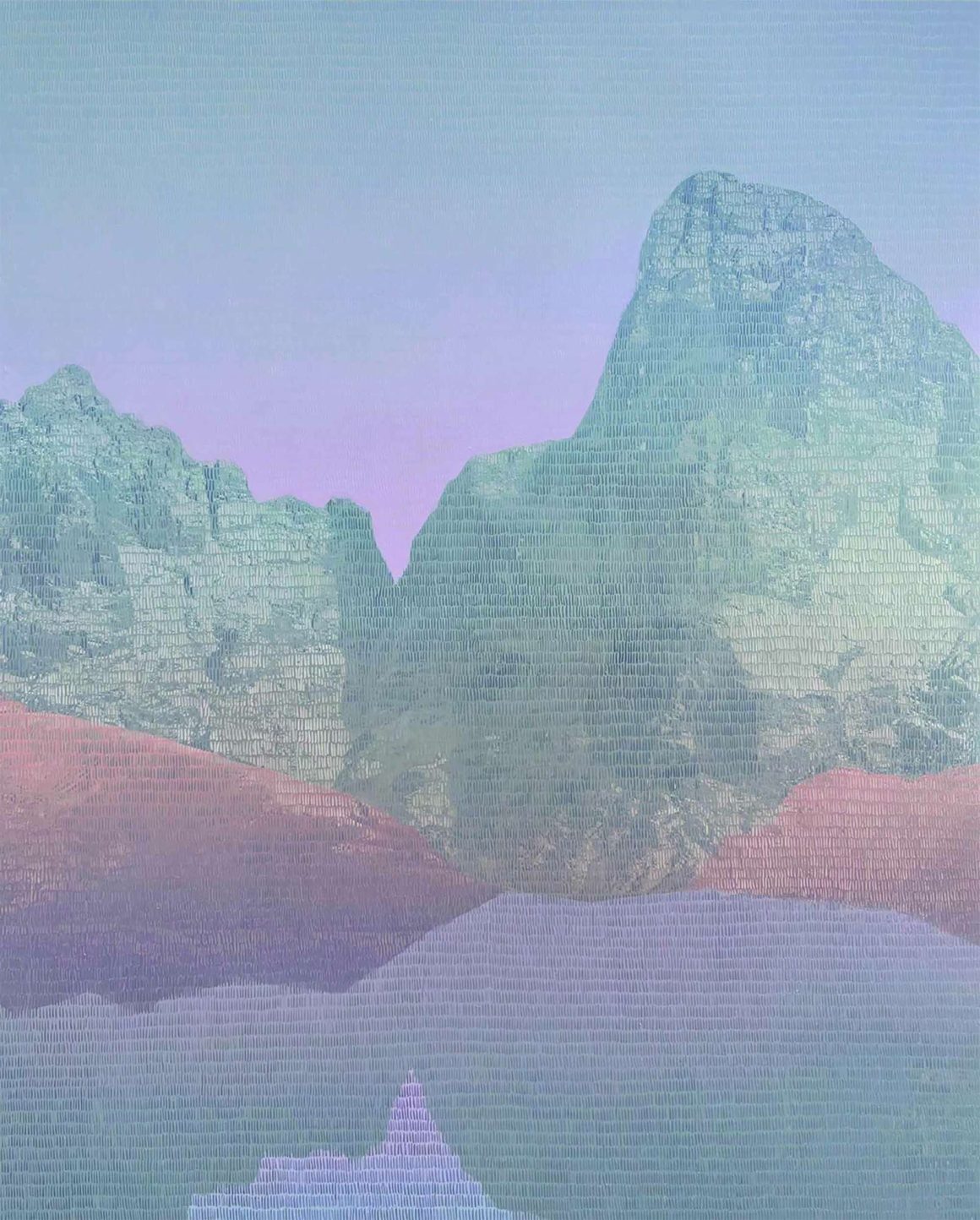
She’d already had her first show and sold some pieces when, meditating on a beach during a trip to Haida Gwaii, April resolved that she wanted more art in her life. “I didn’t know what that would look like, or how it would happen,” she says. “I just knew I wanted more art.”
Within 24 hours, April got the call from Whistler Contemporary Gallery co-owner Kyle Nordman. He’d seen her art at a dinner party and was impressed enough to reach out with an offer to showcase her work exclusively.
“We were captivated by April Matheson’s artistic prowess, particularly her reveal-and-remove technique,” says Tara Wolters-Smythe, COO of Off-Piste Fine Arts, which owns a number of galleries including Whistler Contemporary. “In her work, we found a delicate dance between presence and absence, where every stroke unveils a hint of what is below. It’s this ability to provoke introspection and evoke a sense of mystery that compelled us to showcase April’s artistry in our gallery.”
April’s latest exploration is applying her method to old family pictures, often on commission. “I like taking these little photos, often stashed away, and turning them into heirloom pieces that demand to be seen,” she says. “Old photos are great—there’s a simplicity to those images. Everyone standing straight, facing forward; we’ve got one shot, don’t mess it up.”
She hasn’t messed it up—those old photos shimmer with vitality under rows of etched windows, giving new life to people long gone. And while April doesn’t claim she’s created a new method, it’s possible the new method created her—a fully-fledged artist no longer caged by perfectionism in a windowless building.
Find April’s work in the Whistler Contemporary Gallery in the Four Seasons Whistler or hit up www.aprilmatheson.com.

Check the ML Podcast!