88
MOUNTAINLIFE
SUMMER2016
words Carmen Kuntz :: illustration Dave Barnes
Recovering from adventure sport injuries doesn’t get easier with practice.
It’s as much a mental game as it is a physical one. Over the years I’ve
developed a long list of injuries and a short list of tools that help keep
mind and body both fit and happy. These 5 S’s of Healing helped get me
through multiple knee surgeries, concussions, broken bones, whiplash
and even a broken heart. The journey from cast to saddle can be a long
ride, but it doesn’t all have to suck.
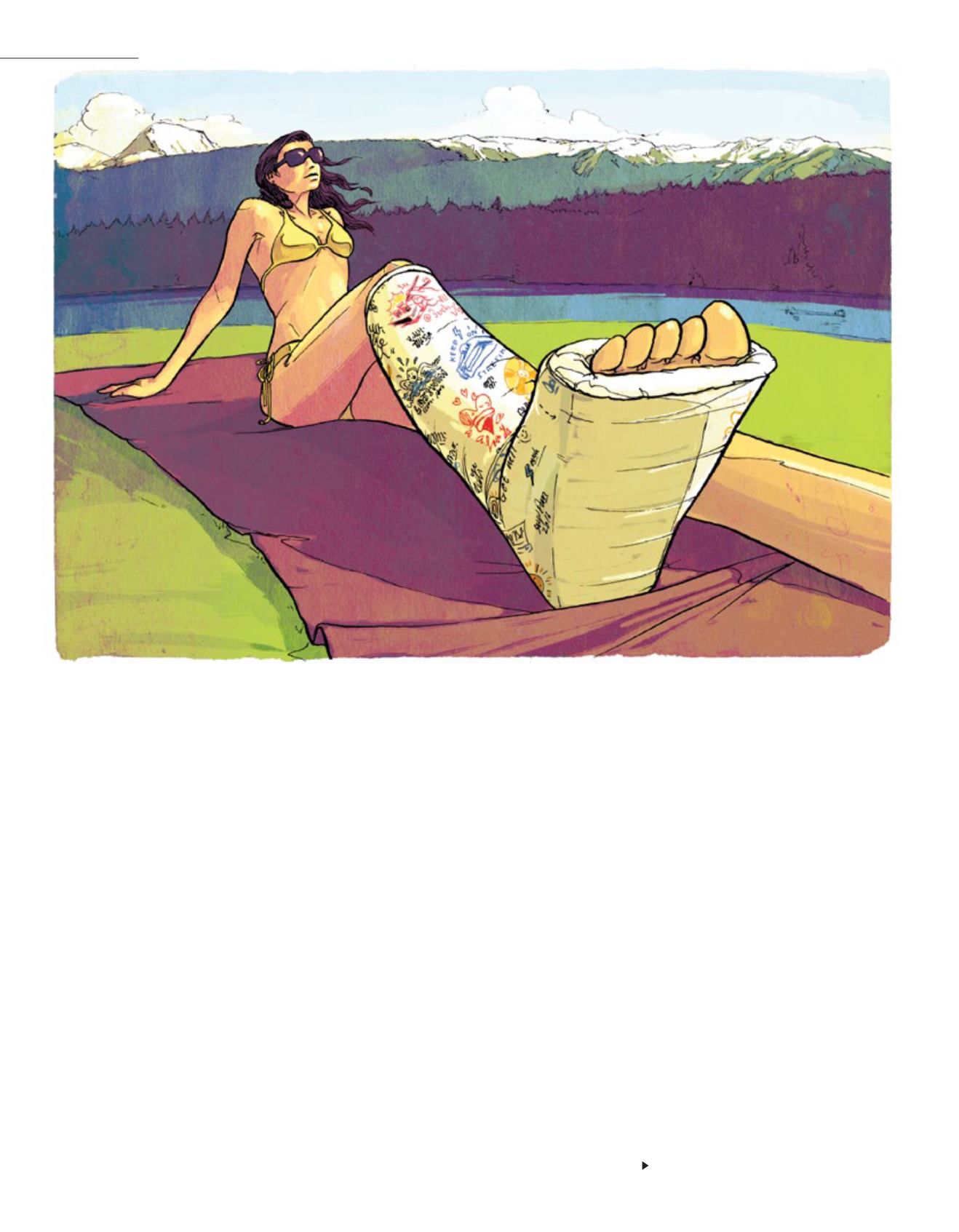
SUNSHINE
It’s primal: hot sun on bare skin just feels good.
“The warmth of the sun is a pleasurable sensation that can distract from
any discomfort associated with an injury,” says Dr. Laurel Paterson, a
Vancouver-based Registered Psychologist. “Sunshine and exposure to
light can lead to better sleep which can helpmood and recovery.”
According to the Dietitians of Canada, recent research suggests vitamin D
may boost the immune system and keep infection at bay; which isn’t
a bad thing if you are going under the knife. And if you’re bound to
crutches or locked in a cast watching your muscle mass disappear before
your eyes… at least you can hide behind a golden tan.
SWIMMING
When experiencing the limited terrestrial mobility that comes with
injured lower extremities, getting in the water gives you the freedom of
movement you crave.
“Swimming and aquatic exercises can be excellent for rehabbing joint
injuries, provided that you’re in a suitable stage of healing,” says
physiotherapist, Pat McKinnon. With offices in Squamish and Pemberton,
McKinnon gives a thumbs up to water rehab – in the lake, ocean or pool.
“It’s a great, low-impact aerobic activity, and the buoyancy of the water
often allows you to perform certain actions in the pool that you might
not yet otherwise be able to do on land.” Tempting as it may be, stay
away from the diving board.
WELLNESS
THE5S’SOFHEALING
RECOVERY ISABATTLE,BUT ITDOESN’THAVETOSUCK


