SUMMER2016
MOUNTAINLIFE
81
CARVINGANEWFUTURE
“As a province-wide approach, we’re saying that if we’re going to make trails
and mountain biking sustainable, then we have to do it through the lens of
reconciliation,” says Patrick Lucas, community planner and founder of the
Aboriginal YouthMountain Bike Program. “We have to work with local First
Nations, respect their territory, respect their culture andmake sure they’re taking
leadership over the development of these trails. Unless those relationships are
built, nothing is going tohappen.”
Lucas points to the success of introducing mountain biking to the Simpcw
Nation in theNorthThompsonRiver region,where the sport isbeing embraced
by both local communities and visitors. An all-aboriginal trail crew constructs
trails and ensures trail heads are signed with interpretative information about
their nation and local culture.
“It’sgettingmorepeopleouton the land,using the trailsand justbeingoutdoors.
That’s something that’s beenmissing in our communities,” saysTomEustache,
Chief of theSimpcwNation. “It’s part of our culture.That’swherewemadeour
living from andmaintaining that connection is huge.”
Lucas has seen the effects of this engagement first hand, especially with First
Nations youth. “The kids develop a ferocious pride and sense of identity,” he
says. “That canbe a life saver in these communities.”
Back in Lillooet, the watershedmoment of cooperation between stakeholders,
First Nations and user groups is yet to come, but that has yet to sway Aitken’s
ambition. “I ride down in Pemberton and Whistler and I see the benefit
of tourism. That’s why I ran for council, to promote Lillooet as an outdoor
destination. It’sworking, just not as fast as I’d like it to.”
Withmountainbikers passing throughLillooet almost everydayof the summer
on theirway to other riding destinations such asWilliams Lake andKamloops,
or returning toWhistler over theDuffey Lake Road, Aitkenwants to see those
bikers spend more time on trails before filling up the tank and driving away.
With the desert-like climate in the valley, all-season riding is possible with a
shorter commute than year-round destinations such as Vancouver Island and
the SunshineCoast.
But that can only happen if mountain bikers remain patient and avoid taking
liberties, such as building their own rogue trails and jump lines without
consulting local stakeholders.
“People are coming andwe want (LORCA) to direct people where to ride,” he
says. “We’re trying tomove forward, not backwards. It’s not that I don’t want
people to come, I justwant them tobe respectful of the land, and thevalues that
FirstNations put on the land.”
Lillooetmaybe in its infancyasamountainbikedestination,butasuccessful synergy
between biker ambition and First Nations stewardship could set the stage for this
rural town’snextboom. “We’re laying thegroundwork for itnow,” saysAitken. “It’s
going tobea long road, but I think it’sgoing tobeworth it in theend.”
P.79
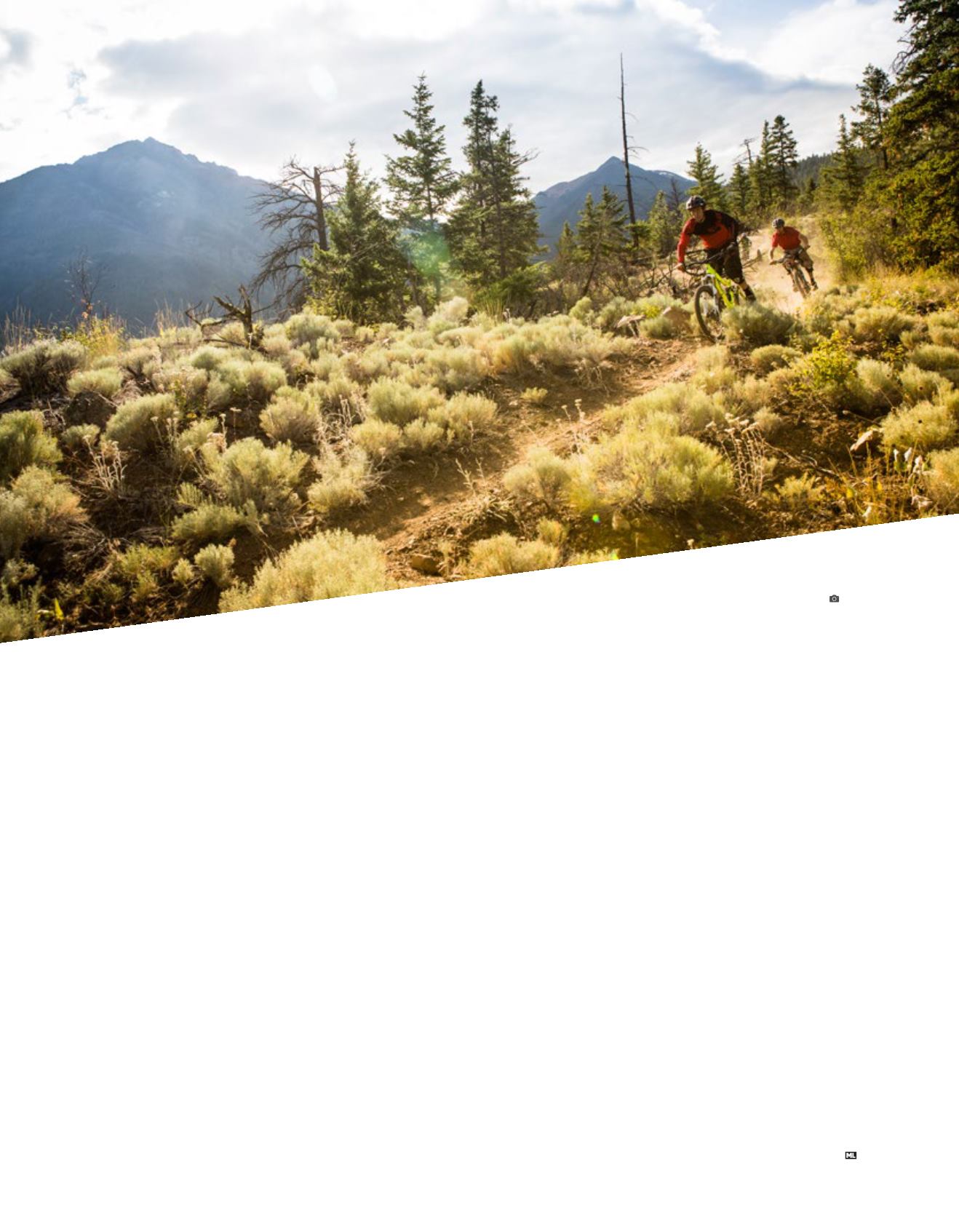
Big turnswhere thewetmeets the dry.
ABOVE
After the gold rush. Steve Storey (front) andChris Draper. JUSTA JESKOVA


