108
MLBLUE
WINTER2017
of visits tohis restaurant and themeals that are
consumed. “It gets better every year,” he says. “This
past yearwe served300,000 eggs throughwinter,
spring, summer and fall.”
At theResort, President andCOO DanSkelton
embodies a link to the past that theWeider family
has relinquished.His familyhas longhad a flair
for technical improvisation and a deepknowledge
ofmountainoperations.GrandfatherKenwas
Jozo’smountainmanager; fatherBill tookover
that rolewhenKen retired, andnowDan runs the
wholeResort asCOO.Tohis experience in the
fieldwith lifts and trails he added formal training
as an engineer.This has helpedhim to implement
new software andhardware tomodernizeBlue
Mountain’smassive state of the art snowmaking
operation. Evenon a clear and sunnyday, when
the snow guns are going full blast it can look
like a snowstorm is ragingover themountain.
“Intrawest,” jokesGordCanning, “shouldbe
looking at the Skelton grandchildren for future
management.” (DanSkeltonhas two sonswho
have held summer jobs at the resort).
The hurricane forces of change have hit thewhole
area. I can’t avoid culture shockwhen I drive into
CollingwoodorThornbury. In the 1950s itwas a
treat tohave lunchor dinner at one of the handful
of restaurants. I remember hamburgers at theRed
Hen (miraculously still operating), grilled cheese
sandwiches at Bender’sGrill and chop suey at
one of the inevitableChinese eateries.Now there
are 80places todine inCollingwood alone.The
choices range from Italian toMexican and the
décor is upscale and slick.Offices and stores house
sports therapistswho treat athletic but agingbaby
boomers, high-endboutiques selling gifts and
clothing, anddecorators catering towealthy second
homeowners.There are legions of service providers
inplace of the factoryworkerswho left town,
changed jobs or retired.While the transformation
has its problems, it has brought prosperity and
jobs.Manyof our youngpeople are stayingonhere
or returning tobusinesses andpositions thatwere
not herewhen I graduated fromhigh school.
In2013, formy75
th
birthday,my sonMichael took
me to visit our home countries (CzechRepublic
wheremother andgrandmotherHelenwas born)
and theSlovakRepublic, birthplaceof Jozo. It
was our pilgrimage.We visited Jozo’s home cityof
Žilina, aone-hour drive from themountains and
thenwent on toTerchova.This is a smaller town
nestled in a valleynear thebaseof theRozsutec, the
mountainwhere Jozobuilt his original lodge.
Jozo’s firstmountain is an imposingone.Mike,
alongwith a guide,made the one- hour climb to
the site of the chalet, long agodestroyed. Itwas a
scene of great beauty and tranquillity thatmade
me understandmyparents’ nostalgia for the home
fromwhich theywere forced to flee.Outcroppings
of jagged rockmingledwith trees of all shapes
borderedby lushmeadowswhere sheep could
graze. Contrasting shades of green, gray andbrown
etched the valleys and slopes.The spring sunshine
hadmelted the snowon the peakof theRoszutec,
but not on a highermountainon the other side.
InTerchova, theMayorwelcomedus andpraised
Jozo as the Slovak innkeeperwhomade good in
Canada. Even after 80 years, Jozowas remembered
as a goodpromoterwhobrought tourists to the
area and gave employment to local youths. Jozo is
featured in theTerchova hall of fame.
Slovaks love their history. A centrepiece ofTerchova
is amuseumhonouring Jánošík, a bandit leader
whoorganizedSlovakpeasants to fight against
theirHungarianoverlords.Ondisplay aremurals
and emblems of Jánošíkmountedon a horse
andbrandishing an axe.The axewas theweapon
of choice of the Slovakpeasants, whereas the
Hungariannobilityused swords.Until 1918,
Jozo’s 1950sSkiBarn enclosedagricultural
(apple storage) industrial (pottery), hotel
accommodations and foodandbeverage services.
Thismixture of uses would have horrified the
planningauthorities of today.
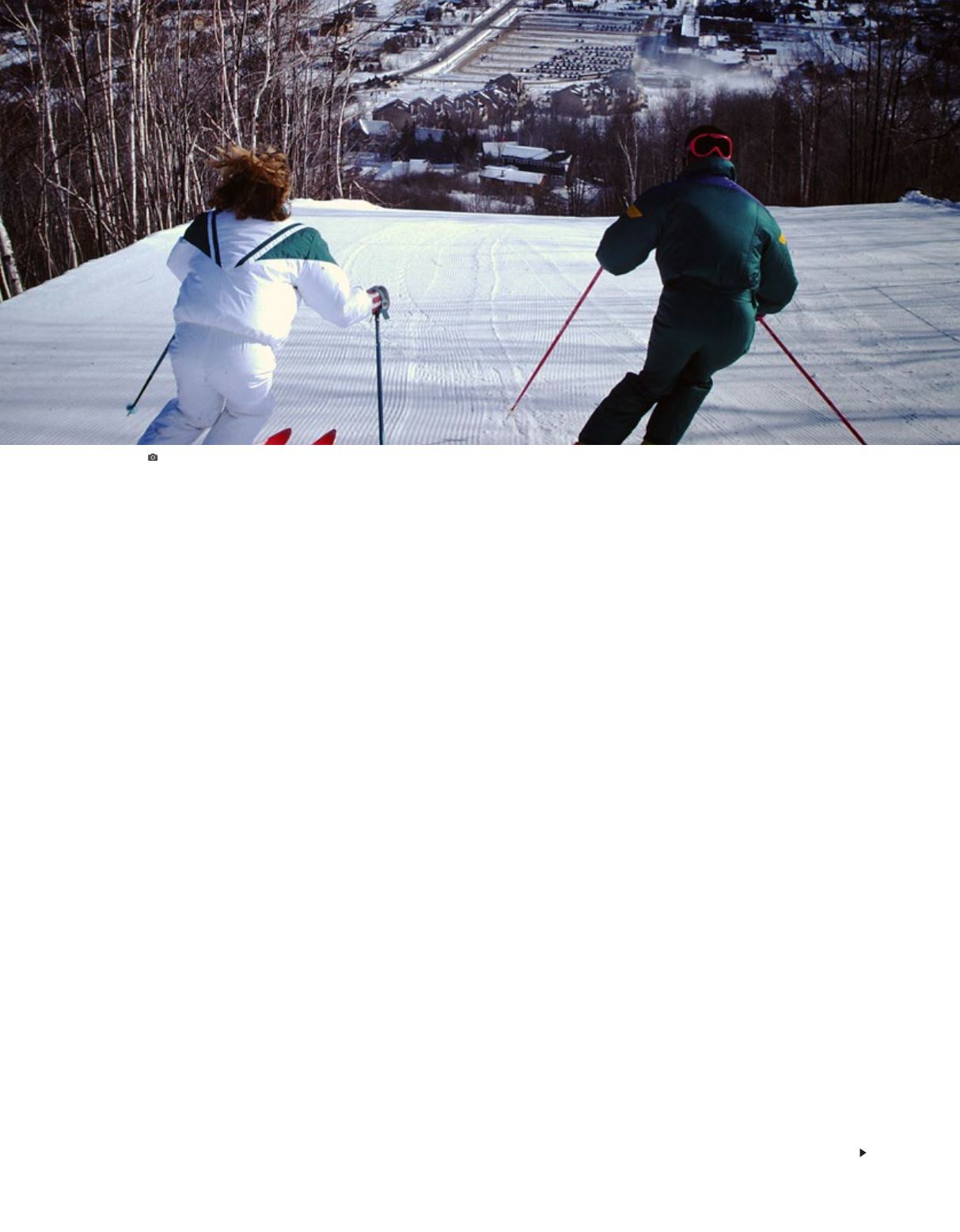
Corduroy turns, 1990s. BMR


