WINTER /SPRING2016
MOUNTAINLIFE
29
What CPAWS and their counterparts aremainly
looking for is aNational Park to be extended on
the BC side, stemming from theWatertonNational
Park, to reciprocatewhatAlberta is doing.Wood
is optimistic andwould like to see the Flathead
area of BC become a refuge of sorts for the
grizzly population.“In 2010 or 2011, the province
announced amoratorium on coal mining [in that
area], so therewill be nomining, or oil and gas
exploration.That was a bigwin andwe are hoping
to build on that by getting an announcement that
theywill also stop logging in the area.”
Grizzly bears live in the CoastMountains aswell.
Brad Sills is the President of CallaghanCountry,
which handles 12,000 hectares of land for the
purposes of commercial outdoor recreation, and
he has had a long historywith grizzly bears in this
neck of thewoods.
“We have beenworkingwith theMinistry of
Environment for ten years,monitoring and
cataloguing by DNA and photography, the
numbers and genealogy of coastal grizzly bears
during the summermonths, andwolverines during
thewinter,”Sills says.“The study has shown the
population in theUpper Squamish/Callaghan/Soo/
Rutherford area to be quite healthy and growing.”
Sills goes on to point out that there aremany
opinions about what type of activity negatively
affects the bear population, but he is optimistic
about where things currently are.“Forty years ago,
predation by hunters/poacherswas alarmingly
present. Every new logging road opened up
previously pristine eco-systems. Now that
harvesting is in a plateau stage and hunting
is nowhere near what it used to be, habitat is
recovering and in siteswhere conditions are
favourable, populations have stabilized and in
some cases are growing.”
Brad does believe thatmore can be done and he
highlights other prevalent issues currently affecting
thegrizzlypopulation.“Thedemiseof salmon stocks
is probably the singlebiggest threat to the survival
of BC’swest coast grizzlies,”he says, adding that, as
omnivores, themountain bears do seem to have
some capacity to adapt to dietary restrictions by
switching to berries, grasses and grubs.
Also a long-termmember ofWhistler Search and
Rescue, Brad’s history in thewildlife and recreation
business has givenhim the perspective towitness
a change for the better over the last several
decades.“When I was younger andworking in the
Forest Service, I had a lot of reservations regarding
whole-scale habitat destruction and the effects it
wouldhave onother species. Itwas pretty brutal in
the 60s to80s, if youwere a bear.With increasing
awareness and a drop inpredation, the numbers
we are seeing in theUpper CallaghanValley on
a steady basis are encouraging. It is becoming
muchmore difficult tobe pessimistic in the face of
growing empirical data.”
Good news such as this is increasingly rare for
at-risk species in this day and age, but also very
encouraging.With continued public awareness,
and especially government cooperation, it looks
like theNorthAmerican grizzly populationmay
escape extinction yet.
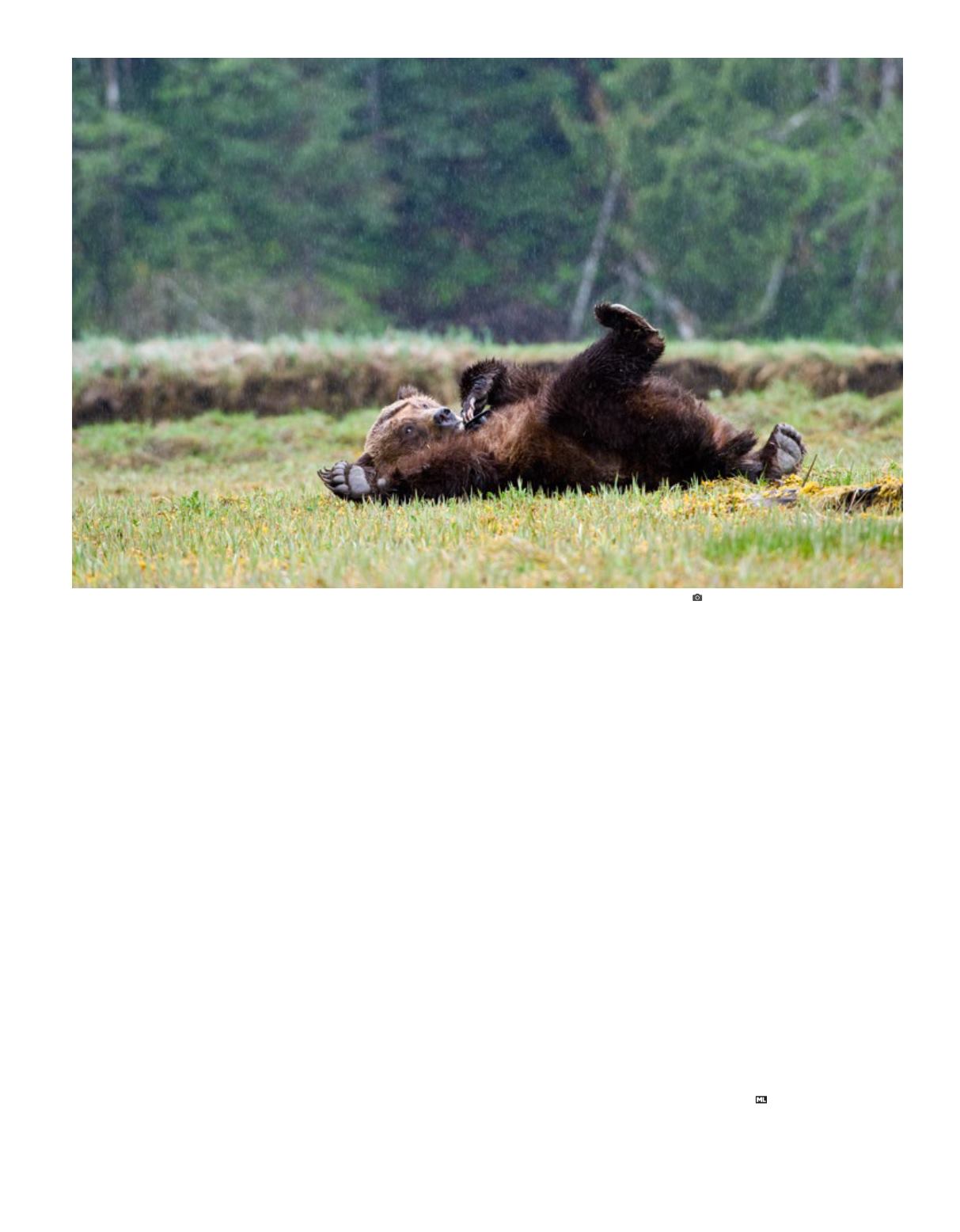
STEPHENHARRINGTON / SHPHOTO.PROSITE.COM
BC remainsas thismissingpiecebecause it isunprotected,
so if you’reagrizzlybear, you canwander freely from theUS
toAlberta, but assoonasyougo intoBCyou’reat risk.


