26
MOUNTAINLIFE
WINTER /SPRING2016
ESCAPINGEXTINCTION
ENVIRONMENT
By JonathanHiltz
The“bear”necessities of life have not come easy
for NorthAmerica’s grizzly bears.The last known
California grizzly, an iconic animal that used to
roam free, fromBC all theway down toMexico,
was shot in the early 1920s, after which the
subspecieswas officially declared extinct.
Over the next century, population numbers of the
NorthAmerican brown bear species also receded
due to hunting and development. Nowadays, the
majority of grizzlies on the continent are found
in thewilds ofAlaska,Montana, BritishColumbia
andAlberta. But thanks to protectionist efforts
over the last few decades, it appears these bears
aremaking a solid comeback.
PeterWood is theDirector of Terrestrial Campaigns
at the Canadian Parks andWilderness Society
(CPAWS) BCChapter and he is one of sixmembers
of the FlatheadWildCampaign, a coalition that
has come together to help create and preserve a
safe environment from hunting and development,
so grizzly bear numbers can continue to grow in
southeasternBC,Alberta andMontana.
“On theAlberta side of theRockies, youhave
WatertonNational Park, and in theUS it’sGlacier
National Park, and this is seen as one of the best
examples of cross boundary conservation,”Wood
says.“Meanwhile, BC remains as thismissingpiece
because it is unprotected, so if you’re a grizzly
bear, you canwander freely from theUS toAlberta,
but as soon as yougo intoBC you’re at risk.”
Peter goes on to explain that hunting is the
primary risk grizzlies face inBC (approximately
three bears are shot every year in the Flathead
area), but the larger concern is habitat loss from
industry, active logging and even recreational
activities such asATVing.“Grizzly bears tend to
avoid human contact in general,”Wood says,
“especially anywhere there is a lot of industrial
activity.”
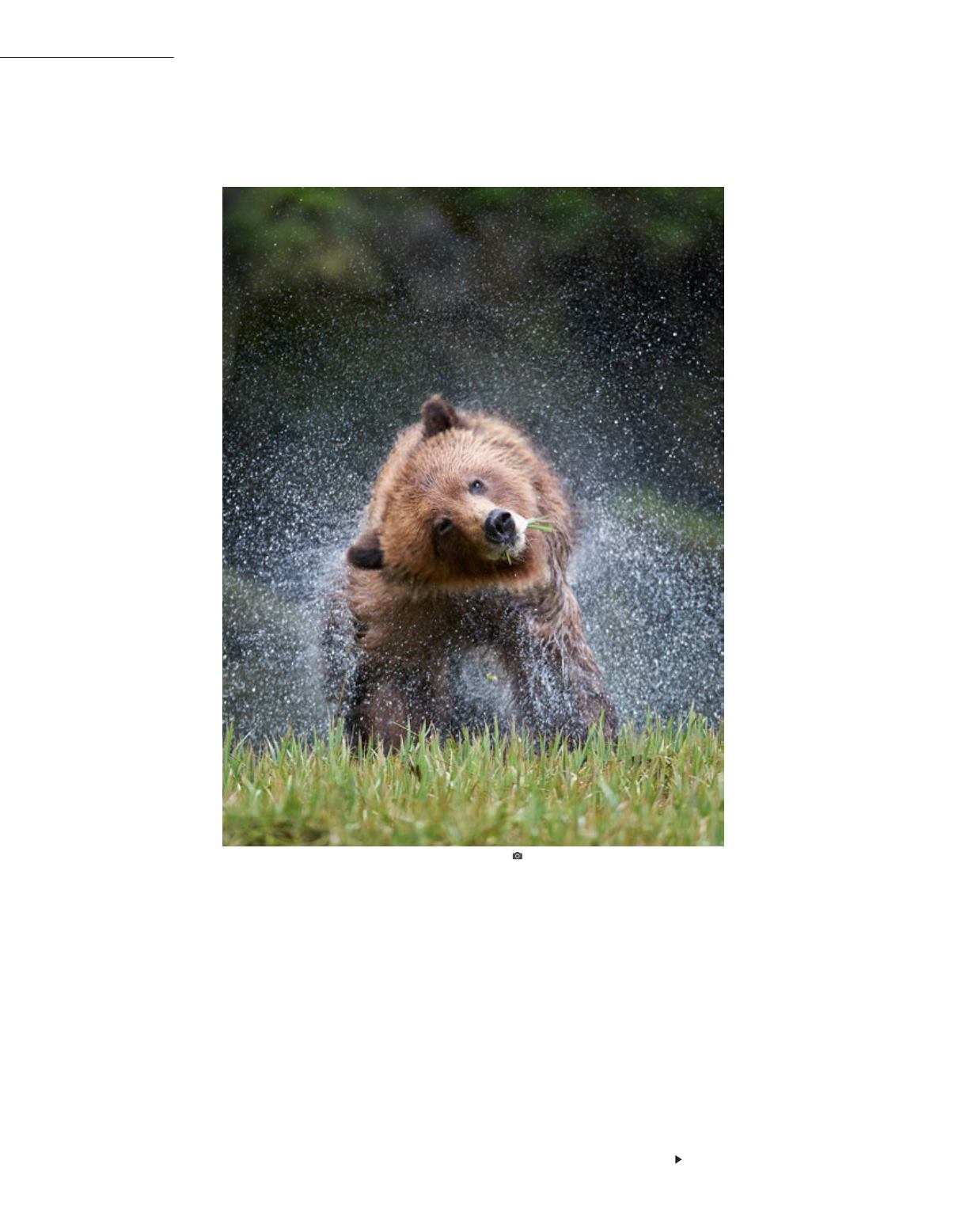
STEPHENHARRINGTON / SHPHOTO.PROSITE.COM


