34
MOUNTAINLIFEBLUEMOUNTAINS
SUMMER2016
Fitness fads tend to come andgo.With themany
different institutions of fitness culture always
looking toproclaim themselves as the longest,
toughest,most gruellingor intensiveworkouts ever
conceived, the thesaurus is often the only thing
that really gets overworked. In the last decade
obstacle course racinghas arrived, silencing the
stuffed-shirtworldof adjective-drivenworkouts.
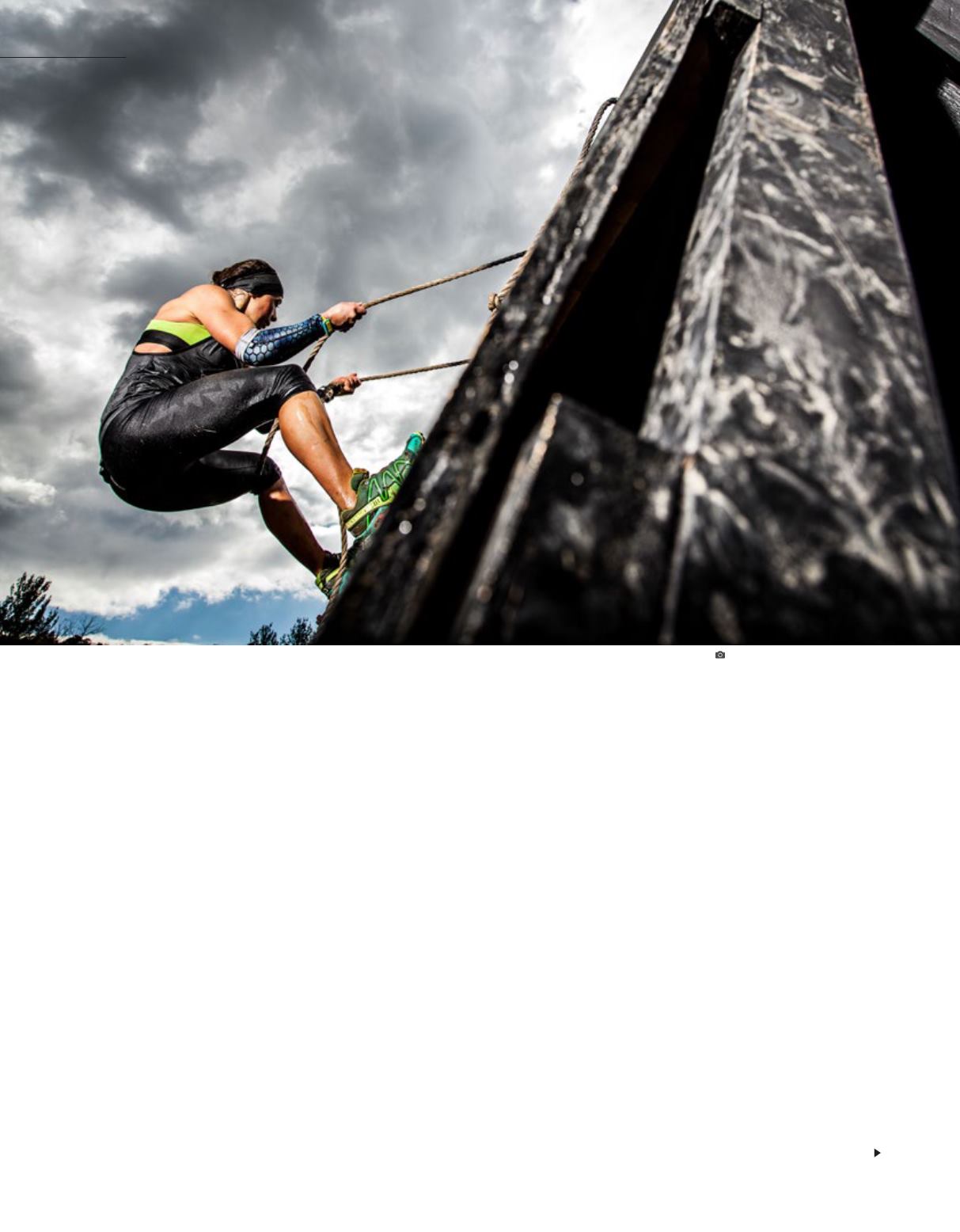
Obstacle course races encourage their participants
toget down anddirty, propelling themselves
throughpits of diluted earth, over timber-framed
walls, even through live-wires that shock and
strainmuscles.This crucible of extreme physicality
encourages teamwork, discipline, camaraderie,
stamina, and strength.The underlyinggoal?To
demonstratewhat extremes the humanbody is
capable of.
Good thing for us, theObstacleCourseRacing
WorldChampionships (OCRWC) are coming to
BlueMountainResort—the first-ever international
legof theOCRWC,whichhas operatedout of
Ohio for the last two years.HostedbyAdventurey,
LLC, andCanadian event production company 365
Sports, the race happensOctober 14-16.
In2009, obstacle course racing saw approximately
400,000participants globally.This year, the
industry is expecting registrationnumbers over
20million,making it one of the fastest-growing
sporting events on earth.
The origins of obstacle course racing lie in ancient
military training. Roman legionaries readied
themselves for campaigns by leapingover natural
obstacles like hedges and streams. Fast-forward
to the early 20
th
century,when FrenchNavy officer
Georges Hébert formulated a unique fitness
philosophy duringhis global travelswhile in the
Navy and from studying ancient Greek andRoman
martial and athletic culture.
Hébert arguably invented themodern
obstacle coursewithwhat he dubbed
parcours
: outdoor tracks throughwhich
athletes ran, jumped, crawled, and
climbedover balance beams,walls,
ladders, ropes, andmounds.Hébert
designed the course togobeyond
physical fitness tobuildmental
discipline and fearlessness.
EventuallyHébert helped train the FrenchNavy in
what he termed
parcours de combattant
during
andbetweenbothWorldWars, andhismethods
soon found adherents around theworldboth in
themilitary and civilian spheres.
In the SecondWorldWar, theUSmilitary pioneered
methods of trainingdesigned for amoremobile
&
DOWN DIRTY
UP
FRONT
COURTESYOCRWORLDCHAMPIONSHIPS
INTHERUN-UPTOTHEOCRWORLD
CHAMPIONSHIPSATBLUE,WE
LOOKATTHEHISTORYOFTHEMOST
PUNISHINGSPORTOFALL
The industry is expecting registration
numbers over 20million, making it one of
the fastest-growing sporting events on earth.


