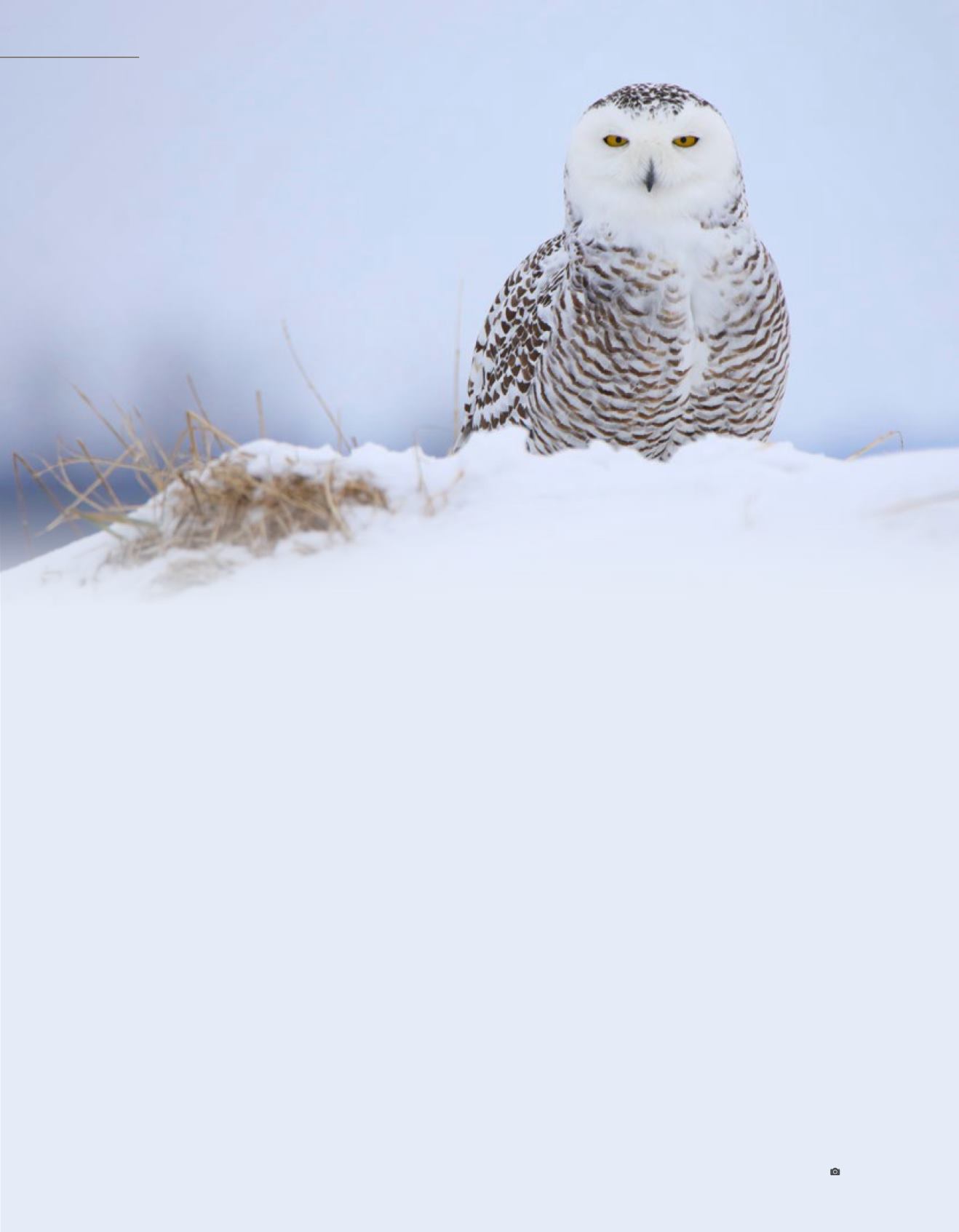
Words by Leslie Anthony & Photography byMaxime Légaré-Vézina
The first camera was an eye,
the first filmmemory, and their first subjects
the living natural world. Since that time we’ve been trying, one way or
another, to record what we see onto a secondmedium—an external
hard drive if you will. Our oldest remaining records—cave paintings—
approximate those first attempts, which were probably formulatedmuch
earlier in non-permanent media like sand. The message, however, is clear:
our animal kin, whether we’re hunting or merely observing them, have
always been key to the human imagination.
Things aren’t so different today, though the urgency of the biodiversity
crisis means more reason than simple fascination to record the animals
we might encounter. Wildlife photography, which has always been an
admired profession, has reached new heights driven by new technologies
and new approaches. Likewise amateur wildlife photography is ballooning
due to the democratization brought about by the two-pronged revolutions
of digital camera and smartphone photography that allow not only decent
pictures to be taken, but to be computer improved and enhanced. Still,
taking pictures of all but the largest creature isn’t entirely easy.
I’ve been photographing critters since my first Kodak Instamatic turned
up under the Christmas tree in the late sixties. On occasion I’ve looked
back through this early catalogue, most comprising the conquests of
my brothers andme in suburban Toronto ravines or near-north cottage
country: fleeting and grubby images of insects, frogs, toads, snakes,
turtles, baby birds and the occasional beaver. One thing stands out:
despite their inherent charm as period pieces, they are all, to a one,
terrible photos. Mere records as opposed to intriguing portraits of even
passing intrigue that say anything about the animal. I’ve gotten better
over the years, but just how does a regular person get good shots of
animals in the wild?
A couple of good lenses help—a decent telephoto is key, as is a macro
for close-ups of smaller life forms—but all wildlife photographers agree
on the one thing that will help any amateur: know your animal. Even a
turtle sunning on a log exhibits behaviours that can add that much-sought
“candid” ingredient to your shot, subtleties that can’t often be seen in a
regular shot taken from the kind of distance a turtle might allow before
it senses your approach and drops back into the water. Naturally, the
Interweb is awash in wildlife photography tips and tricks worth checking
out. Most, however, can be distilled into the following:
SHOOTING
ANIMALS…
BIO
PHILIAC
HOWDOESAREGULARPERSONGETGOOD
SHOTSOFANIMALS INTHEWILD?
Theurgencyof thebiodiversity crisismeansmore
reason thansimple fascination to record the
animalswemight encounter.Wildlifephotography,
whichhasalwaysbeenanadmiredprofession, has
reachednewheightsdrivenbynew technologies
andnewapproaches.
36
MOUNTAINLIFEBLUEMOUNTAINS
SPRING2016
SnowyOwl.


