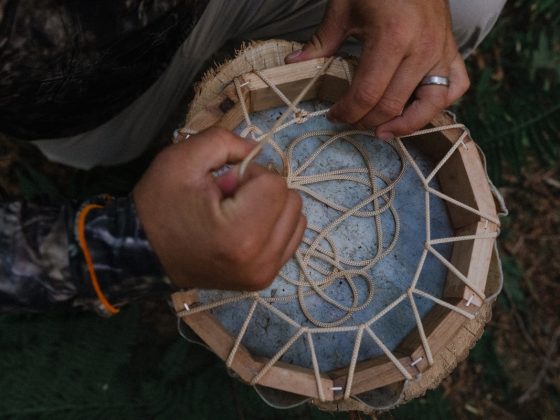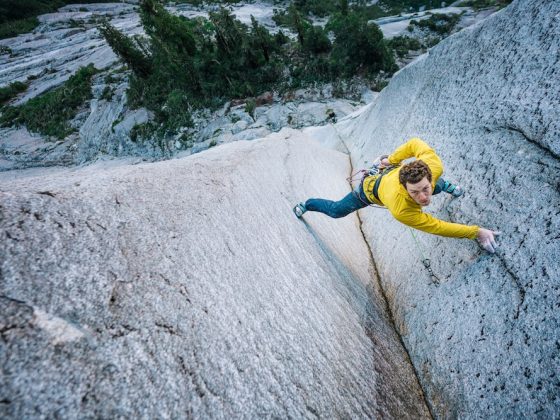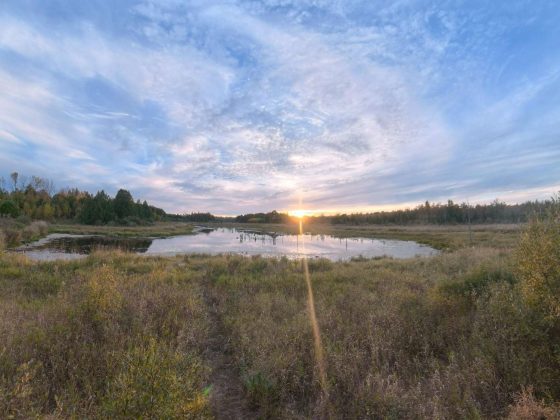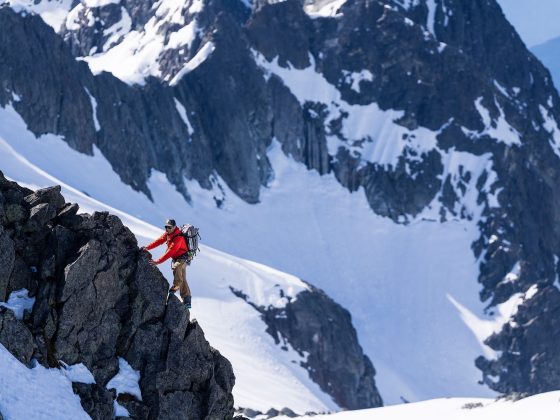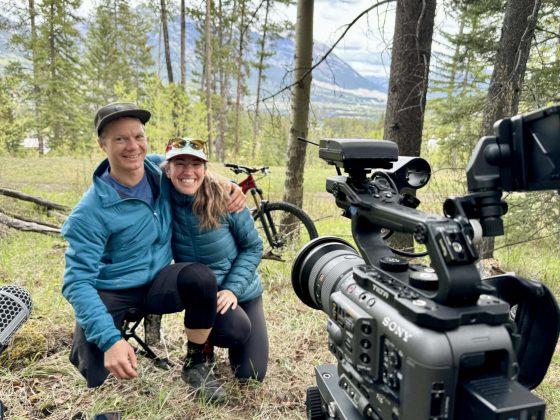
Carter Kirilenko’s eight-minute film explores how art, community and the natural world can help people navigate change.
Words :: Bob Covey // Photos :: Mitch Bowmile
“I felt like I didn’t know how to speak any more.”
After Jasper’s 2024 wildfire, poet Paulette Dubé watched people reach for words to express an experience that was difficult to make sense of. She saw poems and “Dear Jasper” messages proliferate online. Creativity, and writing especially, became one way for people to begin processing what had happened.
“People were really raw, and they wanted to write,” Dubé said. “I’ve never seen more poetry and letters to Jasper on people’s feeds.”

That impulse to make something out of upheaval is at the heart of Stories of Resilience Chapter 1: Voices from Jasper, an eight-minute film by Vancouver-based filmmaker Carter Kirilenko. Made in collaboration with the Resilience Institute, the film follows Dubé and Jasper visual artist Greg Deagle as they explore creativity and their relationship with the landscape after the wildfire.
The film has been named a finalist at the Banff Mountain Film and Book Festival.
Rather than dwell on the spectacle of disaster, Kirilenko turns his attention to a less visible part of recovery: how people begin to find their footing in a place, and a life, that no longer looks the same.
“There’s a soft rebuild that has to happen,” Kirilenko said, describing the emotional work that can continue long after the immediate crisis has passed.
“There’s a soft rebuild that has to happen.”
That work looks different for everyone. Through Dubé’s poetry and Deagle’s art, the film explores how creative expression can help people process change, reconnect with their surroundings and find meaning in an altered landscape.
Kirilenko had worked with the Resilience Institute previously, helping create ReWork Your Future, a documentary series highlighting the diverse sectors of Canada’s clean economy. When the opportunity arose to explore the institute’s broader work around resilience, Kirilenko was drawn to the human stories unfolding in Jasper.
“I wanted to look beyond the dramatic images associated with a wildfire and spend time with the people navigating its aftermath,” he said.
Kirilenko was struck by Dubé’s warmth and gratitude, and by Deagle’s devotion to his art. Even in a landscape marked by fire, Deagle could find beauty in details that might escape someone else’s notice.

“He’s able to find the beauty in just the small little details of life that a lot of people might just miss along the way,” Kirilenko said.
That meticulousness helped shape the film itself. On the final day of filming, Dubé noticed a burn scar on a tree that resembled the shape of a tattoo on her arm. The unexpected connection became a quiet closing moment in the film. For Kirilenko, those encounters reflected the value of approaching a place with curiosity, rather than arriving with a predetermined story. He and cinematographer Mitch Bowmile allowed conversations and observations to shape the shoot as it unfolded.
The result is less a conventional disaster-recovery story and more a meditation on how people live with change. And how art can help them see their surroundings, and themselves, differently.

As Deagle puts it in the film: “Our lives were overturned, and then art comes along in the hope that it will strengthen us.”
“Our lives were overturned, and then art comes along in the hope that it will strengthen us.”
Kirilenko hopes the film encourages audiences to recognize that recovery involves more than rebuilding physical structures. People also need time and space to process grief, connect with one another and find their own ways forward.
“Sometimes resilience begins with a poem, a work of art or a small sign of green in a burned forest,” he said.

The film’s selection for the Banff festival is meaningful for Kirilenko, who has long wanted to attend the event as a filmmaker. For Jasper, the film offers an intimate view of a community still working through the consequences of the wildfire — and of the quiet, personal ways people try to make sense of what comes next.
Stories of Resilience Chapter 1: Voices from Jasper runs eight minutes and screens Nov. 8 at 10 a.m. at the Max Bell Auditorium at the Banff Centre as part of the Banff Mountain Film and Book Festival. The film will be available through the BMFF’s online streaming service from Nov 12-22.