How can climbers and other outdoorists use climate solutions and science at a scale that matters?
words :: Jesse House
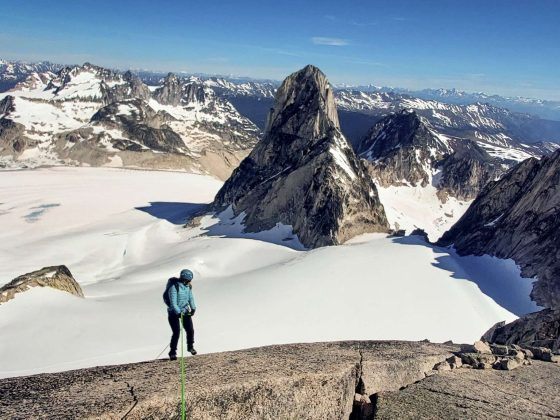
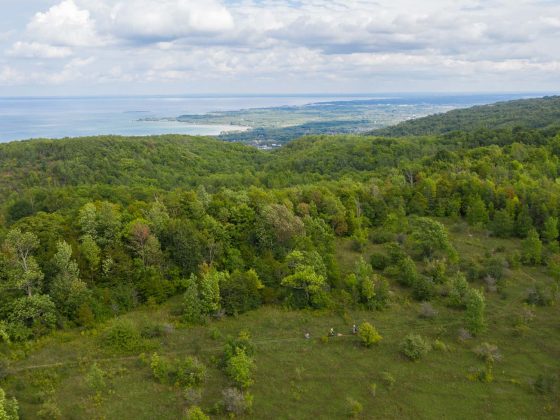
Cliffside on Mount Rundle, I swivel in my harness to gaze at a bird’s-eye view of the landscape. As a climber, I experience both the panoramic views and the microscopic features of the rock in my chalky hands. Trees blanket the valley floor far below while little chert bands in the grey limestone denote my footholds, and ripples across the rock face in front of me hint at oceans of long ago. I observe ants and other insects bustling around as I wait for my partner to climb on. From this cliffside view, I am able to recognize many tiny processes that replicate at a grand scale.

Although not everyone in the Bow Valley climbs, many of us value time in nature, observing both big and small moments that cultivate an appreciation of the natural world. Climate change discussions often emphasize dramatic, newsworthy events such as wildfires or receding glaciers. Less frequently discussed are the more intimate landscape dynamics that have or will change, altering our prized experiences outdoors.
A recent study by Kate Hanly and Graham McDowell demonstrates that warming temperatures in Banff National Park are altering mountain conditions, which can increase risks associated with climbing and hiking as hazards such as rockfall become more frequent.
Less frequently discussed are the more intimate landscape dynamics that have or will change, altering our prized experiences outdoors.
These findings hit home. Recent rockfall incidents in my backyard have injured friends, and I am increasingly wary as I am out adventuring. Climate change for me is no longer a remote phenomenon; rather, it is encroaching into daily life. The ability to recreate and enjoy our home landscapes is changing and will continue to be altered. Changes to snowfall impact skiing conditions, ice melting affects glacier travel and rockfall raises risks in the backcountry.

Growing up, I recycled, rode my bike and took short showers. Yet my modest efforts to protect the environment seem insufficient in the context of our global challenges. These actions can add up, but it is difficult to make a difference at a scale that matters. Like many, I am searching for local actions to make a tangible contribution to mitigating climate change. Through my recent climate-focused internship, I’ve learned about a process that is a large-scale strategy within our community’s influence: protecting natural carbon sequestration and storage. Simply put—it should be a part of everyday climate discussion.
Here’s why: Intact ecosystems remove carbon from the air and store it in plants and soil. Initial studies have shown that ecosystems from Yellowstone (in the U.S.) north to the Yukon, remove about as much carbon each year as 21 million vehicles emit. That is about 83 per cent of all registered vehicles in Canada. However, industries such as mining, logging and agriculture release carbon back into the atmosphere. In some areas, this carbon will not recover for decades, hence contributing to the larger climate issue.
Related content from ML:
Protecting our ecosystems counteracts carbon emissions at a scale that matters in the context of climate change. We can contribute by affecting the amount and quality of protected areas near our communities—especially by identifying landscapes of high value for carbon sequestration and storage. New research by the Yellowstone to Yukon Conservation Initiative (Y2Y) is pinpointing areas that have particularly high carbon benefits, as well as areas with carbon stores that are irrecoverable within the next couple of decades once released.

This exciting research allows us to strategically promote conservation in areas that will maximize climate-regulating benefits. My internship at Y2Y has shown me that we can be empowered to influence these decisions and that they can have a perceivable impact on global climate concerns. Also, strategically protected landscapes help wildlife adapt to climate change because, as temperatures rise, options to move north or to higher elevations will be vital for many species.
Canada has committed to protecting 30 per cent of the country by 2030, but we are only at 13.7 per cent. New data on natural carbon sequestration and storage demonstrates that many of our wild places sequester and store substantial quantities of carbon, and their protection is a powerful strategy for mitigating climate change. It presents the perfect opportunity for people who care about protecting nature and climate to take action.
From my view on the cliff, it is evident how the infinitesimally small carbon sequestration processes occurring in each plant become important.

From my view on the cliff, it is evident how the infinitesimally small carbon sequestration processes occurring in each plant become important. Not one area in the large valley is devoid of plant life. It is beautiful, and it also reveals how we can influence climate on a scale that matters, while protecting the mountains, trees and animals that we cherish.
Jesse House is an undergraduate student at Colorado College. She grew up in the Bow Valley in the Canadian Rockies, which sparked her passion for recreating outdoors. Jesse recently completed an internship focused on climate change and conservation at the Yellowstone to Yukon Conservation Initiative (Y2Y).

Check the ML Podcast!